 English
 العربية



Passing audible gas from the vagina — often called vaginal gas — is common, and in most cases it is not dangerous. In some cases, though, it is the first sign of something that matters: a fistula between the rectum and the vagina, or a weak pelvic floor. A simple examination is what separates the two.
This page covers what makes air build up or enter, when it is normal, when it needs a doctor, and what actually works for each case. Last updated: November 2026.
What is vaginal gas?
The vagina is a muscular canal, open at the cervix and partly closed at the outlet. Air enters it in ordinary ways — intercourse, tampons, exercise, and certain positions — and comes back out with a sound when the muscles contract or when you stand or bend. The medical term is flatus vaginalis.
The key distinction: trapped air is not intestinal gas. But actual intestinal gas (and occasionally stool) escaping through the vagina is a different problem, and it needs to be examined.
Common causes that are not dangerous
- Air trapped after intercourse: the most common cause; it settles on its own.
- Pelvic floor weakness after a vaginal delivery or with age — weaker muscles let air in and hold it less.
- Exercise and positions: core work, yoga, and even standing up suddenly after sitting.
- Tampons and menstrual cups: air enters with them and leaves when they are removed.
- Chronic constipation and straining: repeated pressure weakens the pelvic floor over time.
- Functional vaginal laxity after repeated deliveries — this improves with pelvic floor training, not necessarily with surgery.
Causes that need a doctor — and how to tell them apart
Sometimes the gas leaving the vagina is not trapped air: it is intestinal gas passing through a fistula, an abnormal channel between the rectum and the vagina. Fistulas follow:
- A difficult delivery or a perineal tear that was not fully repaired.
- Previous surgery in the pelvis, rectum or uterus.
- Chronic inflammation, Crohn's disease, or radiotherapy.
Red flags — see a doctor promptly: gas together with traces of stool or fluid from the vagina · persistent foul odour · changing discharge · pain or burning · fever · symptoms that started after a delivery or surgery. The full picture for that case is in passing gas from the vagina after childbirth.
Watch: the rectovaginal fistula explained
Dr. Mohamed Magdy El-Naggar explains when gas points to a fistula between the rectum and the vagina, and when it is simply trapped air:
How the diagnosis is made
- A careful history: deliveries, surgery, when symptoms began, and any link to bowel movements.
- Clinical examination and speculum examination to assess the pelvic floor and any old tear.
- Dye test: dye placed in the rectum and looked for in the vagina, to confirm a fistula.
- MRI or imaging in more complex cases, to map the tract.
- Pelvic floor ultrasound when a functional weakness is suspected.
If the diagnosis is trapped air or muscle weakness, no surgery is needed — the plan is training and physiotherapy. If it is a fistula, surgery is the only effective option, and delay increases inflammation and makes repair harder.
Treatment: from pelvic floor training to surgery
1. Pelvic floor training and physiotherapy. Exercises before and after delivery, correct breathing, and avoiding heavy lifting with the wrong pressure pattern. Supervision by a pelvic floor physiotherapist matters — random exercises can make things worse.
2. Fixing constipation and straining. Enough fibre and fluids, and never postponing a bowel movement — repeated straining is the pelvic floor's worst enemy. The full rules are in hemorrhoid treatment: from home remedies to laser.
3. Treating infection. Recurrent vaginal or anal infection should be treated before any intervention; it worsens symptoms and blurs the diagnosis.
4. Fistula repair. Precise surgery to close the tract, performed after the inflammation is controlled. Success rates improve with an early diagnosis.
5. Avoiding home remedies. Vaginal douches and topical mixtures make it worse by disturbing the natural bacterial balance, and they solve none of the causes above.
Prevention
- Pelvic floor exercises, especially after pregnancy and delivery.
- Treat constipation early and avoid straining on the toilet.
- Have a perineal tear reviewed after delivery instead of leaving it.
- Skip vaginal douches; external washing is enough.
- Get an early assessment if a previous delivery or surgery came with symptoms.
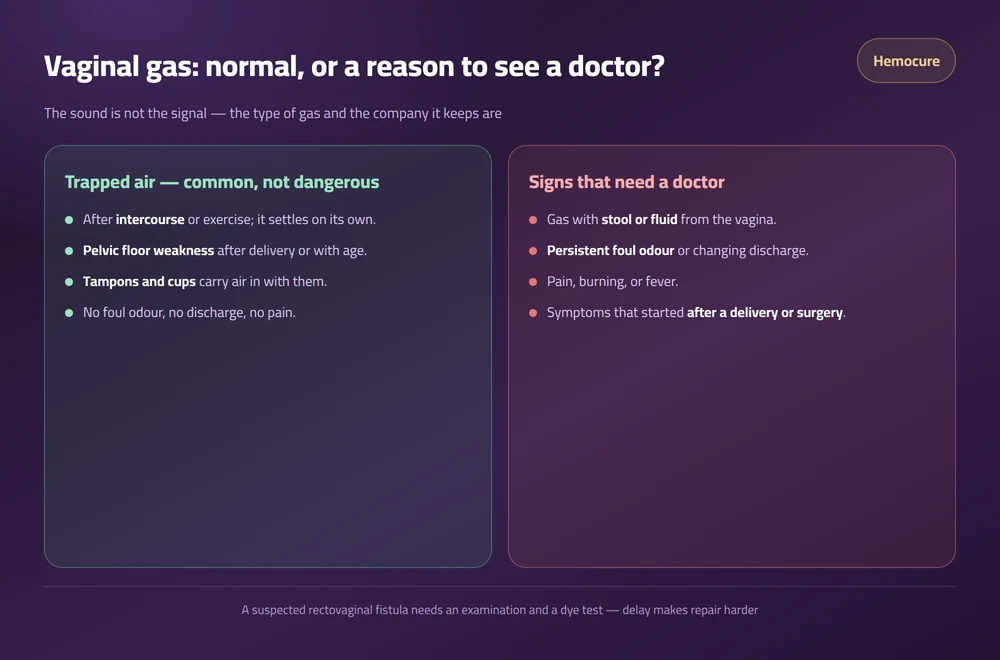
The sound is not the signal — the type of gas and its company are
Frequently asked questions
Is vaginal gas normal?
Trapped air that escapes with a sound after intercourse or exercise is normal and common. Real intestinal gas passing repeatedly, with odour or discharge, needs examination.
Does it mean the vagina is stretched?
Not necessarily. The link is with pelvic floor function more than with anatomy, and that is assessed by examination.
Do pelvic floor exercises cure it?
They clearly reduce it when the cause is muscular, and they make a real difference after delivery — but they do not treat a fistula.
When should I see a doctor immediately?
With stool or fluid from the vagina, persistent foul odour, pain, or symptoms that started after a delivery or surgery.
Gynaecologist or colorectal surgeon?
For pelvic floor or gynaecological causes: a gynaecologist or pelvic floor specialist. When a rectovaginal fistula is suspected: a colorectal surgeon — and both work together in that case.
Book an appointment
If your symptoms worry you or persist, an examination makes the difference. See our pelvic diseases in women department, then book through the contact page or your nearest branch.
Add New Comment