 English
 العربية


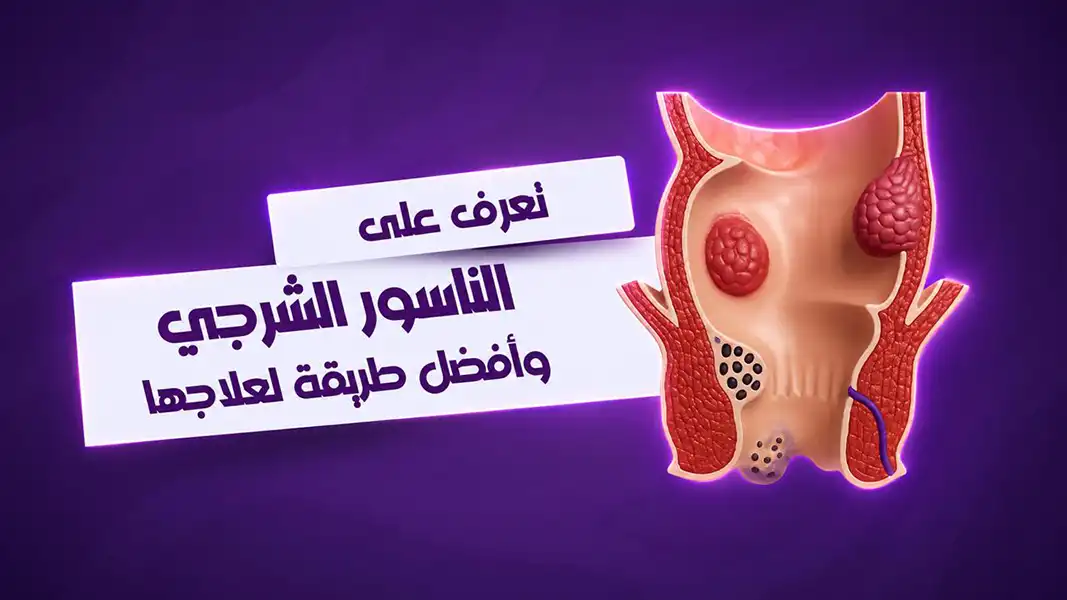
Prepared by: Hemocure Medical Team
Scientific Review: Dr. Mohamed Magdy El-Najjar (Consultant of Laser Colorectal Surgery)
What is an Anal Fistula?
An anal fistula is an abnormal, infected tunnel (track) connecting the internal part of the anal canal or lower rectum to the skin surrounding the anus. This track cannot heal or close on its own. In most instances, it develops as a direct consequence of an anal abscess that previously formed within the small anal glands lining the anal wall.
Anal fistulas are far more common than many realize; patients often suffer from symptoms for months, or even years, before receiving an accurate diagnosis. It is a condition that cannot be cured by medical/drug therapy alone and almost always requires specialized surgical intervention.
Symptoms of an Anal Fistula
Symptoms that should prompt you to consult a colorectal specialist are categorized into:
1. Pain and Discharge
-
Constant or intermittent pain in the anal region that worsens when sitting or during bowel movements.
-
Continuous discharge from the skin surrounding the anus (which may be pus, blood, or mucus).
-
Induration (hardening) of the skin and the appearance of a visible external opening.
2. General Symptoms
-
A persistent feeling of discomfort or uneasiness in the anal area.
-
Fever and chills in cases associated with an active abscess or acute inflammation.
-
Redness and swelling around the anus.
Important Note: A low volume of discharge does not necessarily mean the fistula is simple. A fistula that secretes minimal fluid could be a complex, branched fistula requiring VAAFT technology to map its hidden tracks.
Causes of an Anal Fistula
-
The Primary Cause (Anal Abscess): Around 90% of anal fistula cases originate from an infection in the glands inside the anus. When the resulting abscess ruptures or is drained—whether spontaneously or surgically—a small track may remain open between the infected gland and the external skin, forming the fistula.
-
Crohn's Disease: One of the most critical causes of complex and recurrent fistulas. It heavily influences the treatment plan and must be ruled out in any case of recurrent fistula.
-
Intestinal Tuberculosis: A rare but documented cause.
-
Radiation Therapy: In patients who have undergone pelvic radiation therapy for cancers.
-
Previous Surgeries: Past surgical procedures in the anorectal region.
-
Traumatic Injuries.
Diagnosing an Anal Fistula — How is it Accurately Mapped?
Accurate diagnosis represents half of the cure. A fistula whose complete layout is not mapped will almost certainly recur after surgery. At Hemocure, we utilize:
-
Proctostation: A comprehensive diagnostic workstation for anorectal diseases that performs a high-precision evaluation in a single, painless session.
-
Endoanal Ultrasound: This scan visualizes the fistula track and its exact relationship to the anal sphincter muscles—a vital piece of information for choosing the correct treatment technique.
-
VAAFT (Fistuloscope): A micro-camera inserted directly into the fistula track, revealing the internal opening and any hidden branches under direct vision. It is the gold standard for complex fistulas.
-
MRI Fistula Protocol: Magnetic resonance imaging utilized for highly complex cases or recurrent fistulas following previous failed surgeries.
Types of Anal Fistula — From Simple to Complex
-
Intersphincteric Fistula (Simple/Straight): The track runs between the internal and external sphincter muscles. This is the simplest and easiest type to treat, typically managed with the FiLaC technique alone.
-
Transsphincteric Fistula: The track crosses through a portion of the external sphincter muscle, requiring meticulous planning to preserve fecal continence.
-
Suprasphincteric Fistula: Relatively rare, the track loops over the sphincter muscles, making it technically challenging to manage.
-
Extrasphincteric Fistula: The rarest and most difficult type, where the track runs completely outside the sphincter apparatus.
-
Horseshoe Fistula: The most complex variant. It extends in a horseshoe shape behind or in front of the rectum, presenting multiple external openings and hidden branches. It absolutely requires a combined VAAFT + FiLaC approach and highly specialized expertise.
Treatment Options for Anal Fistula
Traditional Surgery (Fistulotomy / Fistulectomy)
This involves cutting open the entire length of the fistula track, leaving it to heal from the inside out. While highly effective for simple fistulas, it leaves a large open wound and carries a risk of damaging the sphincter muscles in complex cases.
Seton — Surgical Thread
A specialized thread or loop passed through the fistula track to drain infection and allow gradual healing while protecting the sphincter muscles. It is commonly used as a first-stage procedure for complex fistulas before applying laser therapy in the second stage.
VAAFT — Video-Assisted Anal Fistula Treatment
The most precise technology available for mapping branched fistulas. A micro-camera (Fistuloscope) is introduced into the fistula track to achieve three goals simultaneously:
-
It identifies the internal opening with a degree of precision unachievable by any other examination.
-
It exposes hidden side-tracks that fail to show up on ultrasound or MRI scans.
-
It allows the application of electrocoagulation inside the track to destroy its lining from within.
Dr. Mohamed Magdy El-Najjar was the pioneer who introduced VAAFT technology to Egypt, and Hemocure applies it to all complex and branched fistula cases.
FiLaC — Fistula-Tract Laser Closure
This technique uses laser energy to destroy the epithelial lining of the fistula track, stimulating natural, tissue-sparing closure from the inside out without extensive surgical incisions.
-
Key Advantages:
-
Complete preservation of the anal sphincter muscles (zero risk of incontinence).
-
A minimal, puncture-like wound (highly valued by female patients).
-
Significantly faster recovery compared to conventional surgery.
-
The procedure takes roughly 10 minutes for simple cases.
-
-
When is FiLaC used alone? For simple, straight, unbranched intersphincteric fistulas.
-
When are VAAFT + FiLaC combined? For branched fistulas, horseshoe fistulas, and recurrent cases after failed prior operations.
"We cannot treat a branched fistula using laser alone—the procedure will fail. We must manage it using both laser and VAAFT to pinpoint exactly where the fistula branches off."
— Dr. Mohamed Magdy El-Najjar
Anal Fistula Laser Surgery Cost in Egypt 2026
The cost of laser fistula treatment in Egypt varies widely from one case to another. A simple, straight fistula is entirely different from a complex, branched track or a horseshoe fistula that requires multi-stage interventions. At Hemocure, final pricing is determined only after a comprehensive clinical examination and precise diagnosis.
Factors Determining the Cost of Anal Fistula Surgery:
| Factor | Impact on Price |
| Type & Complexity of Fistula | Simple tracks cost less than complex or branched variants. |
| Technology Utilized | Whether using FiLaC alone or combining VAAFT + FiLaC. |
| Number of Treatment Stages | Needing a temporary Seton placement prior to final laser sealing. |
| Pre-operative Diagnostics | The requirement for Proctostation, Endoanal Ultrasound, or MRI scans. |
| Type of Anesthesia | Saddle block (spinal) anesthesia is more cost-effective and safer than general anesthesia. |
Medical Insurance — Does it Cover Laser Fistula Treatment?
Hemocure is contracted with the majority of medical insurance providers in Egypt. Laser anal fistula surgery is classified and approved as a standard surgical procedure. To verify your specific plan coverage, please contact the Hemocure team via our hotline: 15251.
Search for your company listed here "Treating Anorectal Diseases via Medical Insurance"
Anal Fistula in Women — Specific Considerations
Anal fistulas in female patients present unique anatomical and clinical challenges:
-
Anatomical Differences: The distance between the anus and the vagina is short in women, making the fistula track very close to the reproductive organs. This complicates traditional open surgery, making laser the safest, most precise option.
-
Rectovaginal Fistula: A specialized, complex type where a track forms between the rectum and the vagina. Dealing with this requires a highly experienced specialist.
-
Cosmetic Appearance: The tiny entry wound left by the laser is highly preferable for female patients compared to the large, open, and painful scars left by traditional surgery.
-
Pregnancy and Childbirth: A fistula discovered during pregnancy requires careful, multidisciplinary timing to determine the safest course of management.
Why Do Anal Fistulas Recur After Treatment?
Recurrent fistulas are among the most frustrating issues faced by patients who undergo treatment at non-specialized centers. Recurrence happens due to:
-
Failure to completely close the internal opening: This is by far the most common cause. If the internal opening remains even partially patent, the fistula will inevitably return, regardless of the surgical method used.
-
Undetected hidden branches: In branched fistulas, secondary tracks missed by not utilizing VAAFT remain a source of chronic infection, fueling recurrence.
-
Uncontrolled Crohn's Disease: If a patient has underlying Crohn's disease that is undiagnosed or poorly managed, the fistula will likely recur despite a technically flawless surgery.
-
Non-compliance with post-operative care: Constipation, prolonged sitting, and failing to maintain proper local hygiene.
-
Seeking treatment at non-specialized centers: Anal fistulas require a dedicated colorectal specialist rather than a general surgeon—this choice is the leading factor behind chronic, recurrent cases.
At Hemocure, the surgical team utilizes VAAFT to fully map the fistula network before closure. This explains our exceptionally high success rates in treating complex, recurrent cases that failed elsewhere.
Post-Operative Tips After Laser Anal Fistula Surgery
-
Warm Sitz Baths: Sit in a tub of clean, warm water for 10–15 minutes, 3 times daily, especially after bowel movements. This keeps the area sterile, reduces inflammation, and accelerates tissue healing.
-
High-Fiber Diet and Fluids: Drink at least 2 liters of water daily, along with eating plenty of vegetables, fruits, and whole grains. Maintaining soft stools is paramount during recovery (avoid constipation at all costs).
-
Avoid Prolonged Sitting: Continuous sitting applies direct pressure on the surgical site and hinders blood circulation. Avoid sitting for more than 30–45 minutes at a time during the first week.
-
Antibiotics: Complete the full prescribed course of antibiotics down to the last pill, even if you feel completely better. Stopping early can lead to bacterial resistance and a return of infection.
-
Warning Signs (Contact your doctor immediately if you experience):
-
A fever exceeding 38.5°C.
-
Progressively worsening pain after the third post-operative day.
-
Severe swelling or spreading redness around the anus.
-
Foul-smelling discharge or a sudden change in fluid nature.
-
Expected Recovery Timeline After Laser Fistula Surgery
| Time Period | What to Expect & Permissible Activities |
| Days 1 - 2 | Strict rest, mild over-the-counter pain relievers, and plenty of fluids. |
| Days 3 - 7 | Warm sitz baths 3x daily; light movement and walking inside the house. |
| Week 2 | Gradual return to routine daily activities; resuming desk work is permissible. |
| Weeks 3 - 4 | Follow-up visit with the surgeon; near-complete return to normal life. |
| Months 2 - 3 | Complete tissue healing and permanent stabilization in the majority of cases. |
The Difference Between an Anal Fistula and an Anal Abscess
| Feature | Anal Abscess | Anal Fistula |
| Definition | An acute, sudden collection of pus within the perianal tissues. | A chronic, permanent abnormal tunnel beneath the skin. |
| Symptoms | Sharp, throbbing pain + fever + sudden swelling. | Persistent or intermittent pus/bloody discharge + dull ache. |
| Treatment | Emergency surgical incision and drainage. | Meticulous mapping and specialized technology-driven closure. |
| The Relationship | An acute abscess can track out and turn into a fistula. | A chronic fistula is almost always preceded by a poorly healed abscess. |
Medical Warning: An anal abscess must never be left untreated or managed solely with antibiotics. Delaying its surgical drainage significantly increases the risk of it morphing into a complex anal fistula, complicating future treatment.
Comments
Add New Comment