 English
 العربية


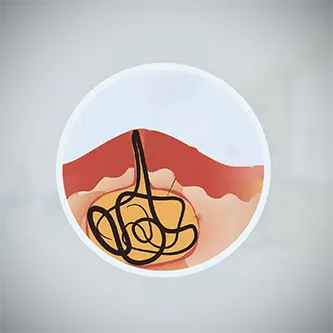
Pain at the bottom of your back every time you sit, and a spot of blood or yellow discharge on your underwear? The cause may be a pilonidal sinus. It is a very common condition among young people, and treating it has become far easier than it used to be. In this article we explain what it is, why it affects young people in particular, how to tell it apart from an anal fistula, why medication alone is not enough, and how we treat it with laser without a large wound.
What is a pilonidal sinus?
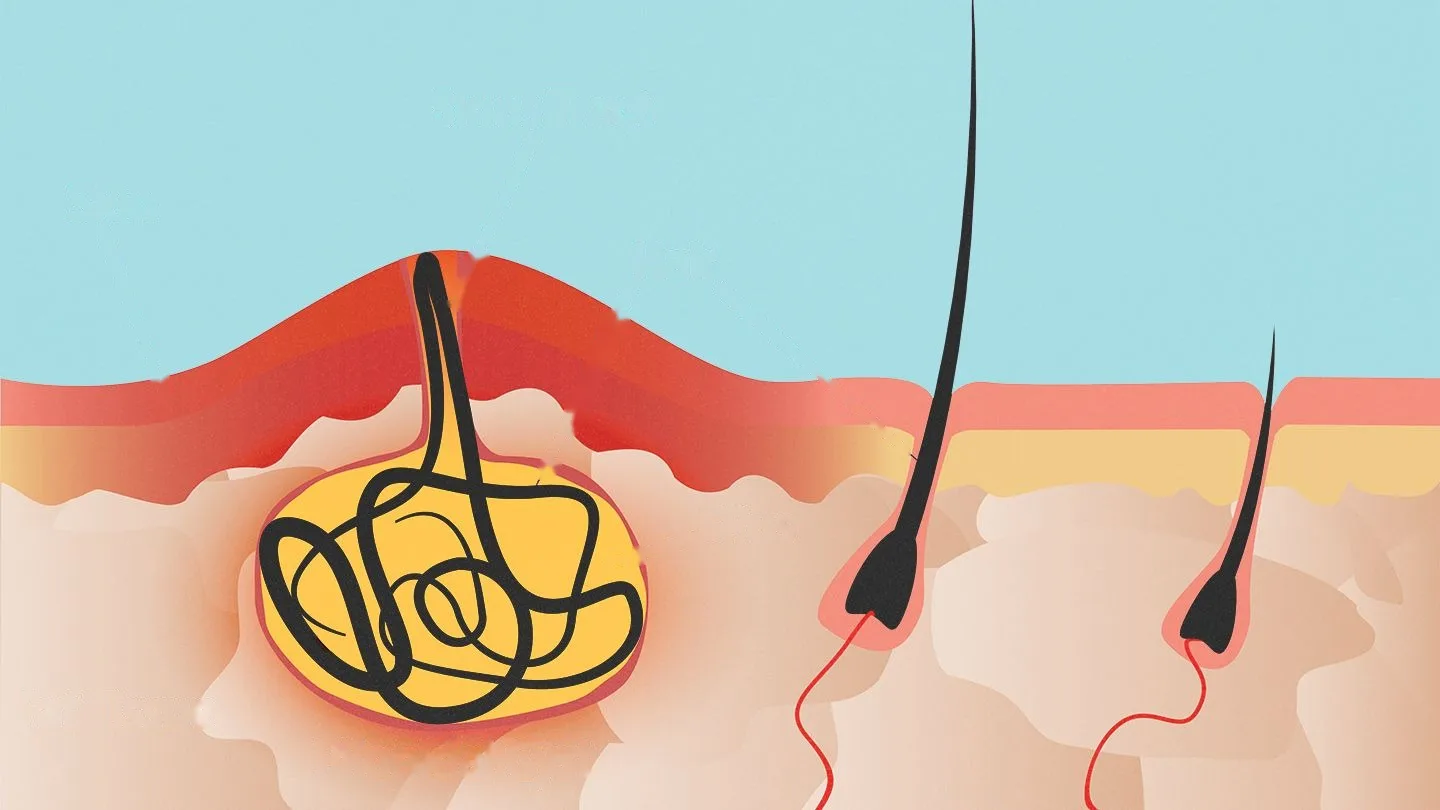
A pilonidal sinus is a small tract buried under the skin at the bottom of the back, in the crease between the buttocks just above the tailbone. It shows on the skin surface as one or more very small openings, and hair, dead skin and discharge collect inside it. It is essentially the body's reaction to a hair that penetrates the skin and settles beneath it, so the body treats it as a foreign body[2]. The same condition rarely appears elsewhere on the body, such as the navel or the armpit, but its usual site is the bottom of the back.
The condition has an amusing history: during World War II it affected large numbers of soldiers who spent hours in Jeep vehicles on rough roads, so it was called “jeep disease” at the time.
Dr. Mohamed Magdy ElnaggarVideo “The Story of the Pilonidal Sinus”“Soldiers either die or come down with a pilonidal sinus.”
Who is most at risk of a pilonidal sinus?
A pilonidal sinus most often affects young people between 15 and 25 years of age, and it rarely appears for the first time after the age of 30. It is more common in males than in females, because thick, coarse hair is the main culprit. The chance of developing it increases with:
- Heavy hair growth in the lower back area.
- Sitting for long periods, as in studying, desk work and driving.
- Excess weight.
- Inadequate hygiene of the area and heavy sweating.
What are the symptoms of a pilonidal sinus?
The most common sign is very small openings in the middle of the crease between the buttocks[2]. Along with them, you may notice:
- Pain in the lower back that worsens with sitting, so you keep shifting your position all the time.
- Spots of blood on tissue or on your underwear.
- Yellow discharge, which may have an unpleasant odor.
- Hairs coming out of the openings themselves.
- Swelling, redness and severe pain if an abscess forms.
Dr. Mohamed Magdy ElnaggarVideo “Pilonidal Sinus: Causes and Treatment Options”“Whenever he sits down he is uncomfortable, and he keeps shifting his position to ease the pain a little.”
Many patients, especially girls, ignore mild discharge or feel embarrassed by it, so they do not see a doctor until a painful abscess has formed.
When should you see a doctor?
See a doctor as soon as you notice an opening or discharge at the bottom of your back, because treating the sinus while it is small is far easier. Do not delay if a painful swelling, redness or warmth appears in the area, since these are signs of an abscess that needs prompt treatment.
Why does a pilonidal sinus happen?
The most likely cause is that shed or coarse hair penetrates the skin in the crease between the buttocks, driven by friction and pressure from sitting and movement. The body then forms inflammation around it and then a small abscess, and over time it turns into a chronic tract[1]. This is why hair removal matters so much in prevention and in preventing recurrence.
What is the difference between a pilonidal sinus and an anal fistula?
The names are similar, but they are two different conditions in site, cause and treatment:
| Pilonidal sinus | Anal fistula | |
|---|---|---|
| Site | Lower back, between the buttocks above the tailbone | Around the anal opening |
| What it is | A tract under the skin where hair collects | A tract connecting the inside of the anus to the surrounding skin |
| Most common cause | Hair penetrating the skin | Infection of a gland inside the anus, usually after an abscess |
| Connection to the anus | Usually not connected to the anus | Connected to the anal canal |
This is why the doctor also examines the anal area to make sure there is no anal fistula[1]. Very rarely, a neglected pilonidal sinus may extend as far as the anus. To learn more, read about anal fistula.
How is a pilonidal sinus diagnosed?
Diagnosis is easy in most cases and depends on an examination in the clinic[1]. The doctor examines the area to determine:
- The number of openings and their location.
- Whether there is an active abscess right now.
- Whether the sinus is simple and in the midline, or branching into the buttocks.
- Whether you have had previous surgery in the area.
In branching cases, the full details become visible during the operation itself with the VAAFT camera, as you will read in the treatment section.
Types of pilonidal sinus, and which treatment suits each type
| Case | How it looks | Suitable treatment |
|---|---|---|
| Acute abscess | A painful, red swelling with warmth | Drain the abscess first, then treat the sinus after the inflammation settles[2] |
| Simple sinus | One or more openings in the crease between the buttocks | SiLaC laser |
| Branching sinus | Tracts extending into the buttocks | VAAFT with laser |
| Recurrent sinus after surgery | Scar tissue from a previous operation | Depends on the case; may require removal of a limited area |
What happens if you ignore a pilonidal sinus?
At first the sinus is one or two openings in a small area. But leaving it opens the door to bigger problems:
- Recurrent abscess that is painful and may need to be drained more than once.
- Branching of the sinus into the buttocks, which makes the operation more difficult.
- Persistent discharge that affects your comfort, your hygiene and your self-confidence.
- Rare extension to the anus in very few cases.
Dr. Mohamed Magdy ElnaggarVideo “Pilonidal Sinus: Causes and Treatment Options”“If it goes on a little longer, the pilonidal sinus will branch into the buttocks… and then the operation becomes a bit more difficult.”
How is a pilonidal sinus treated?
A pilonidal sinus is not treated with medication alone; an antibiotic may calm the inflammation temporarily, but it does not remove the hair from inside the tract or close it. It therefore needs an intervention. Here is a quick comparison of the methods:
| Method | The idea | Wound and recovery |
|---|---|---|
| Laser (SiLaC) | Cleaning the hair out of the tract, then cauterizing it from the inside | Small openings and fast recovery |
| VAAFT with laser | A camera that sees every branch, then cleaning and cauterizing them | Like laser, with a full view of the branching tracts |
| Traditional surgery | Removal of the entire area | A large open wound, dressings and a long recovery |
Laser treatment with the SiLaC technique
At Hemocure we treat pilonidal sinus with the SiLaC (Sinus Laser-assisted Closure) technique using the German Leonardo Plus laser device at a wavelength of 1940 nanometers. It is done in simple steps:
- The small openings on the skin are removed with a fine instrument.
- The tract is cleaned from the inside of all hair and dead tissue until it is clean and dry.
- A very fine laser catheter is inserted through these openings.
- The entire wall of the tract is cauterized from the inside, section by section, so it shrinks and heals.
In the end, only very small openings remain, about 3 millimeters each, instead of the long open wound.
Dr. Mohamed Magdy ElnaggarVideo “How Do We Treat a Pilonidal Sinus?”“The boy or girl comes out of surgery with openings, each one 3 mm — genuinely 3 mm, no exaggeration.”
In some cases, at the doctor's discretion, we first place a flexible medical thread (a seton) inside the tract for several weeks, usually 3 to 6, and then continue with the laser. The patient barely feels this thread, and it prevents pus from collecting and prepares the tract to heal. Not every patient needs it.
With this, we do not need to remove a large part of the body. A systematic review indicates that laser is a promising and safe treatment for chronic pilonidal sinus, with less pain and faster recovery[3]. In the interest of scientific honesty: some patients may need a second laser session before the sinus heals completely, as a multicenter study showed[4], and long-term studies comparing it with surgery are still few.

Dr. Mohamed Magdy ElnaggarVideo “The Story of the Pilonidal Sinus”“Imagine a patient who used to stay at home for two or three months changing a wound dressing… now he goes back to his life completely normally 24 hours after the operation.”
VAAFT for the branching sinus
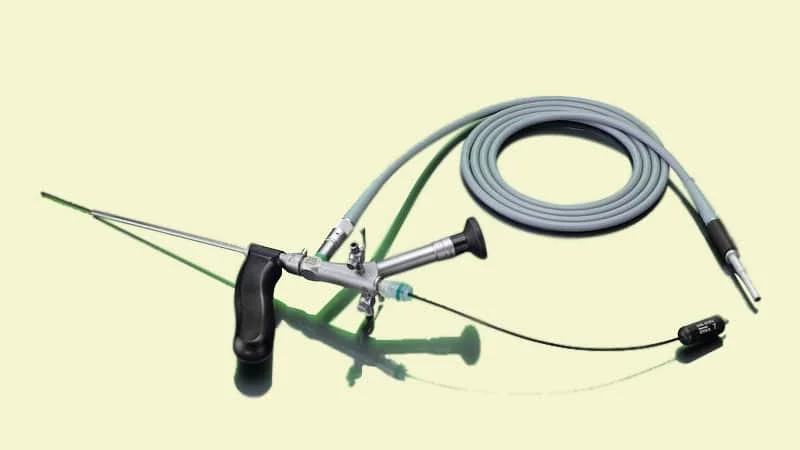
If the sinus is branching or large, we use VAAFT: a scope with a very small camera that enters through the sinus openings, so the surgeon sees all the branches on the screen, to the right and to the left. Through it we remove the hair with fine instruments, then cauterize the tracts with the laser, so no part is missed. The American guidelines recommend these endoscopic methods, provided the equipment and specialized expertise are available[1][5].
Traditional surgery
Traditional surgery relied on removing the entire area, leaving a large open wound that needed daily dressings and forcing the patient to stay at home for two to three months. That is why at Hemocure we start with laser, and resort to excision in a few cases, such as some patients who have had previous surgery and still have unhealthy tissue that needs to be removed.
Dr. Mohamed Magdy ElnaggarVideo “Pilonidal Sinus: Causes and Treatment Options”“The patient will recover either way… but the whole point is how the patient lives after the operation.”
What happens on the day of the operation?
The operation is performed in the hospital, starting with simple procedures that take only minutes, and then you go into the operating room.
| Duration of the operation | About 10 minutes to a quarter of an hour, whatever the size of the sinus or its branches |
|---|---|
| After the operation | A short stay in the recovery room, then two to three hours in your room |
| Discharge | The same day |
| Return to normal life | Within about 24 hours |
| The wound | No large wound and no daily dressings |
Dr. Mohamed Magdy ElnaggarVideo “What Happens on the Day of Pilonidal Sinus Surgery?”“If he has somewhere to go that same evening, he can go.”
Prevention and care after treatment
Since hair is the main culprit, prevention starts with getting rid of it, whether before the condition develops or after treatment to reduce the chance of recurrence:
- Remove the hair from the area regularly. The American guidelines recommend shaving at least once a week, or laser hair removal[2]. An analysis of randomized trials showed that laser hair removal clearly reduces the chance of the sinus coming back[6].
- Keep the area clean and dry, especially if you sweat a lot.
- Do not sit for long periods without moving around, and use a medical cushion if your work requires sitting.
- Maintain a healthy weight and exercise regularly.
More videos with Dr. Mohamed Magdy Elnaggar
- Why are young people more prone to pilonidal sinus? — In Elnaggar's Company (6:16)
- A common condition affecting boys and girls: what are its symptoms? — Medicine on the Blackboard (2:03)
- Pilonidal Sinus — Medicine on the Blackboard (3:40)
- Pilonidal Sinus: Symptoms and Treatment Options — Extended Episode (28:40)
- How is a pilonidal sinus treated? (21:37)
- Pilonidal Sinus — Dr. Mohamed Magdy Elnaggar (21:25)

Founder of Hemocure and the first to introduce laser anorectal surgery in Egypt in 2014. Chairman of the Training Board of the International Society for Laser Surgery of the Anus and Rectum (ISLOP) and the international reference in anorectal surgery, and recipient of the State Appreciation Award in 2018.
Read more
- Anal fistula: symptoms, types and treatment options
- Hemorrhoids: symptoms, grades and treatment options
- Anal fissure: symptoms, causes and treatment options
Scientific references
- Johnson EK, Vogel JD, Cowan ML, Feingold DL, Steele SR. The American Society of Colon and Rectal Surgeons' Clinical Practice Guidelines for the Management of Pilonidal Disease. Dis Colon Rectum. 2019;62(2):146–157. https://doi.org/10.1097/DCR.0000000000001237
- Pilonidal Disease Management: Guidelines from the ASCRS. Am Fam Physician. 2019;100(9):582–583. https://www.aafp.org/pubs/afp/issues/2019/1101/p582.html
- Romic I, Augustin G, Bogdanic B, et al. Laser treatment of pilonidal disease: a systematic review. Lasers Med Sci. 2022;37(2):723–732. https://doi.org/10.1007/s10103-021-03379-x
- Sinus laser-assisted closure (SiLaC®) for pilonidal disease: results of a multicentre cohort study. Tech Coloproctol. 2022. https://doi.org/10.1007/s10151-021-02550-4
- Manigrasso M, Anoldo P, Cantore G, et al. Endoscopic Treatment of Pilonidal Sinus Disease: State of Art and Review of the Literature. Front Surg. 2022;8:812128. https://doi.org/10.3389/fsurg.2021.812128
- Muscat N, Gupta A, Arifuzaman M, Soxibova F. Preventing Pilonidal Sinus Recurrence With Laser Hair Epilation: A Systematic Review and Meta-Analysis of Randomized Controlled Trials. Cureus. 2024;16(6):e62807. https://doi.org/10.7759/cureus.62807
This article is for awareness and does not replace a medical examination.
Book your consultation
Noticed an opening or discharge at the bottom of your back? The earlier you treat the sinus, the simpler the operation. Online booking takes a minute, and if you would like to talk to us first, call the hotline.
Or call the hotline 15251, and the Hemocure team will set the appointment and the nearest branch with you.
Answers to the most common questions about the condition — from pain and diagnosis to treatment and returning after surgery — are in Frequently Asked Questions below.