 English
 العربية


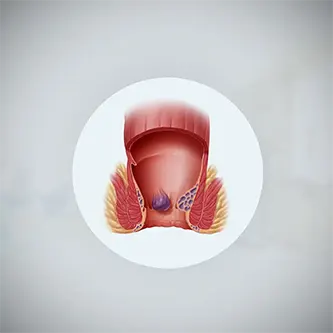
Hemorrhoids are one of the most common health problems, yet many people delay getting them checked, whether out of embarrassment or out of fear of surgery. In this article we explain to you simply: what hemorrhoids are, how you know you have them, when medication is enough, and when you need laser treatment.
What are hemorrhoids?
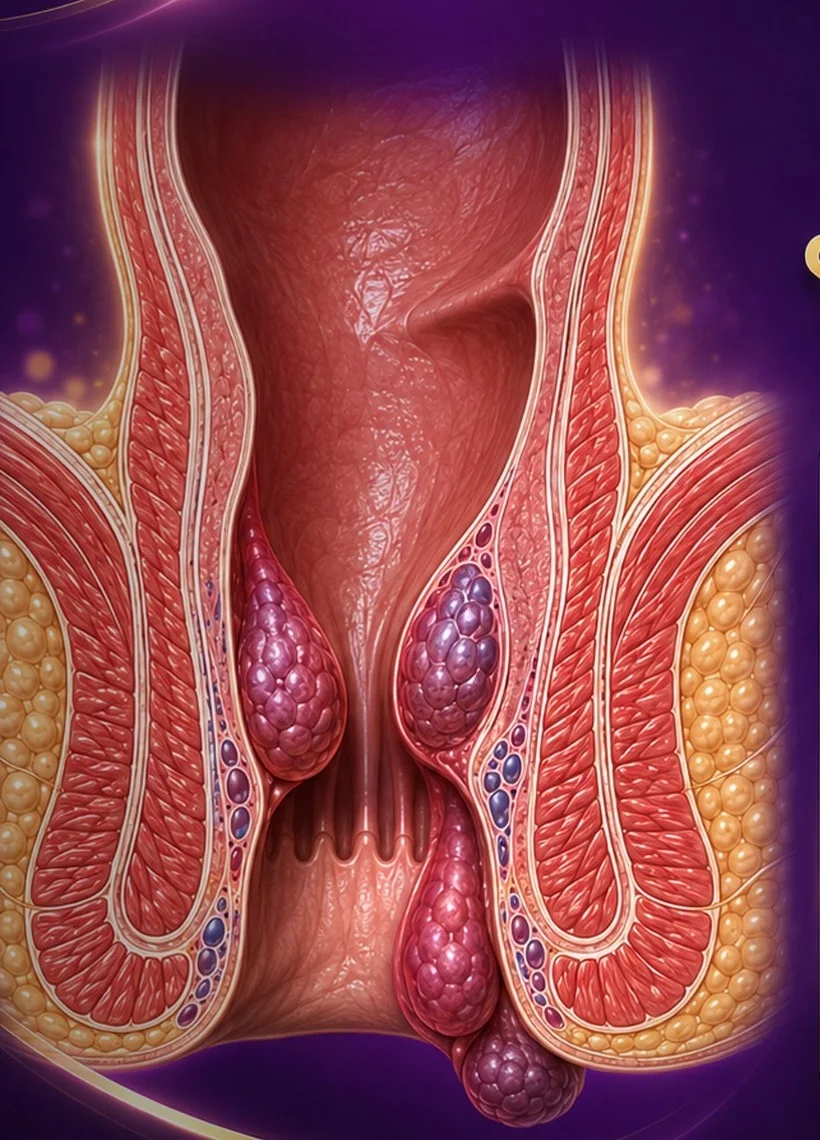
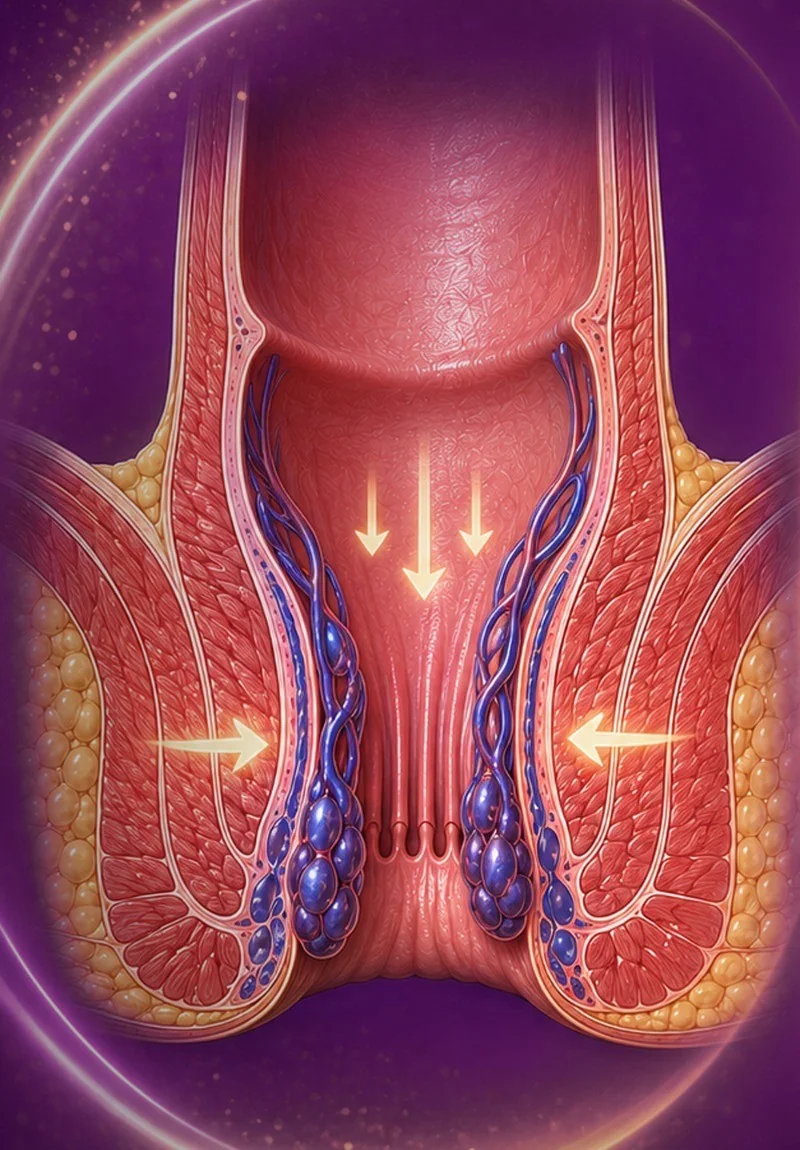
Hemorrhoids are blood vessels that swell and enlarge at the end of the rectum and around the anus[3]. These vessels exist in every human being normally, but they turn into a problem when they enlarge and start to bother you. They are of two types, and the difference between them is in this table:
| Internal hemorrhoids | External hemorrhoids | |
|---|---|---|
| Where they are | Inside the anal canal and the end of the rectum | Under the skin around the anus |
| Can you see them? | No, unless they come down to the outside | Yes, or you feel them as a small lump |
| Pain | Usually painless | Itching, and they may be painful |
| Clearest sign | Blood during a bowel movement | A lump or swelling at the opening |
| Grades | Four grades, according to how far they come down | Not divided into grades |
Learn more about what external hemorrhoids look like and their symptoms.
What are the symptoms of hemorrhoids?
Symptoms differ according to the type and the grade. The most common are:
- Light red blood during a bowel movement or shortly afterwards.
- A bulge or lump at the anus.
- Itching or irritation around the opening.
- Pain or discomfort, especially when sitting for a long time.
And sometimes you feel nothing at all for years:
Dr. Mohamed Magdy Elnaggar“El-Hekaya Fiha En” episode“You can have hemorrhoids for 10 years and have no symptoms at all, which is why we say that hemorrhoids are a disease with no symptom until complications occur.”
When should you see a doctor?
Dr. Mohamed Magdy Elnaggar“El-Hekaya Fiha En” episode“Not everything that looks simple is really simple… We all imagine that we have hemorrhoids, and people tell us to take a cream and take an ointment, but be careful: there may be more to the story.”
Hemorrhoids are the most common cause of problems at the anus, but they are not the only cause. Bleeding may be a sign of other diseases, such as inflammation of the colon or cancer of the colon and rectum[3]. Dr. Elnaggar reassures you that more than 90% of these cases are simple, but the examination alone is what settles the matter. So do not delay visiting the doctor if:
- You notice any blood from the anus.
- The symptoms last more than a week despite treatment at home[3].
- You feel sudden severe pain or a painful swelling (read about the complications).
And because some diseases have similar symptoms, it may help you to read: Does blood with stool always mean hemorrhoids? and How do you tell hemorrhoids from an anal fissure?
Why do hemorrhoids happen?
Hemorrhoids appear when the pressure on the veins of the anal area increases for a long period. The things that most often cause this pressure are[3]:
- Chronic constipation and straining on the toilet.
- Sitting for a long time on the toilet.
- Chronic diarrhea.
- Too little fiber in food.
- Pregnancy.
- Carrying heavy things regularly.
- Advancing age.
Hemorrhoids are not linked to a particular age. Dr. Elnaggar says that they appear in young people in their twenties and thirties just as they appear after sixty. And eating a lot of fast food that is low in fiber increases constipation, and with it the chances of developing them increase.
How are hemorrhoids diagnosed?
The doctor first asks you about your symptoms, how long you have had them, and your habits on the toilet, then examines you. These are the steps recommended by the American guidelines for colon and rectal surgery[1]. And a colonoscope may be requested for some patients with bleeding, according to age and symptoms[1].
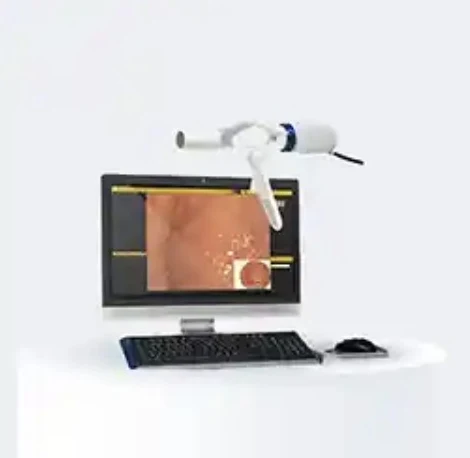
In a number of Hemocure branches, the examination is done with the Proctostation, which is a small scope that images the anus and the rectum from the inside and determines the grade of the hemorrhoids precisely:
Dr. Mohamed Magdy ElnaggarVideo on diagnosis with the Proctostation“The scope is done with no preparation at all and with no pain at all; it takes two or three minutes and we take our report.”
What are the grades of internal hemorrhoids?
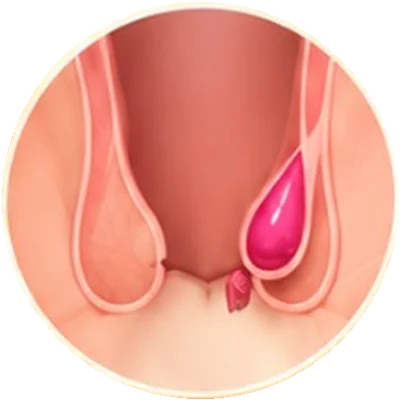
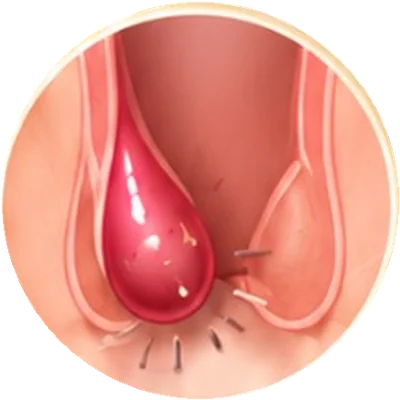
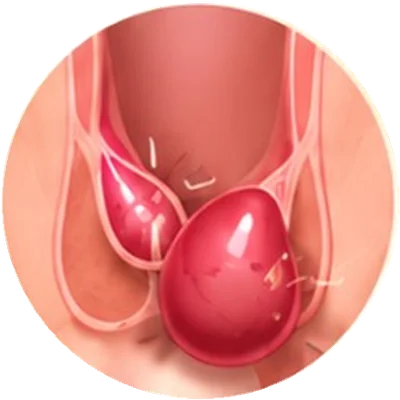
Internal hemorrhoids have four grades, according to how far they come down outside the anus. And knowing the grade is what determines the treatment that suits you:

| Grade | What happens? | What do you feel? |
|---|---|---|
| The first | They stay inside and do not come down | Discomfort when sitting, with no clear pain |
| The second | They come down during a bowel movement and go back by themselves | Slight pain, and sometimes drops of blood |
| The third | They come down and only go back if they are pushed back in by hand | A feeling that something has come down after a bowel movement |
| The fourth | They are always down and do not go back | Continuous protrusion and more severe symptoms |
Dr. Mohamed Magdy ElnaggarHemocure podcast“Hemorrhoids that are grade three are operated on, but while we are comfortable… we can say to the patient: you have to have an operation, choose its time at your leisure, tomorrow, after a week, after two or three weeks.”
What are the complications of hemorrhoids?
The more treatment is delayed and the higher the grade, the greater the chances of complications. The most important of them are[3]:
- Clotting: a clot forms inside external hemorrhoids, causing sudden and painful swelling.
- Strangulation: the blood is cut off from internal hemorrhoids that have come down, because the muscles of the anus press on them. This is an emergency.
- Anemia: because of slight bleeding that repeats over a long period.
- Ulceration and inflammation in hemorrhoids that have come down.
How are hemorrhoids treated?
After the examination the doctor chooses your treatment according to the grade of the hemorrhoids and the severity of the symptoms. And the good news is that most cases do not need an operation:
Dr. Mohamed Magdy ElnaggarHemocure podcast“The conversion rate at Hemocure is 25%, meaning that out of every four who come for an examination, one has an operation and three get better with medication.”
| Method | Usually suitable for | The idea in brief |
|---|---|---|
| Medication and adjusting the diet | The first and second grades | Relieving the symptoms and treating constipation |
| LHP laser | The third grade, and some second-grade cases that did not improve | Shrinking the hemorrhoids from the inside instead of cutting them |
| THD with Doppler | The third and fourth grades, according to the case | Tying off the arteries that feed the hemorrhoids and lifting them back to their place |
Is medication enough?
In many cases, yes. The first step is to eat enough fiber and drink enough water, and to adjust your habits on the toilet[1]. Then the doctor prescribes what suits you: medicines that strengthen the walls of the blood vessels, such as flavonoid preparations that reduce bleeding and itching[4], laxatives for constipation, and painkillers. Read more about hemorrhoid medications, and about what helps and what harms in home treatment.
Laser treatment (LHP)
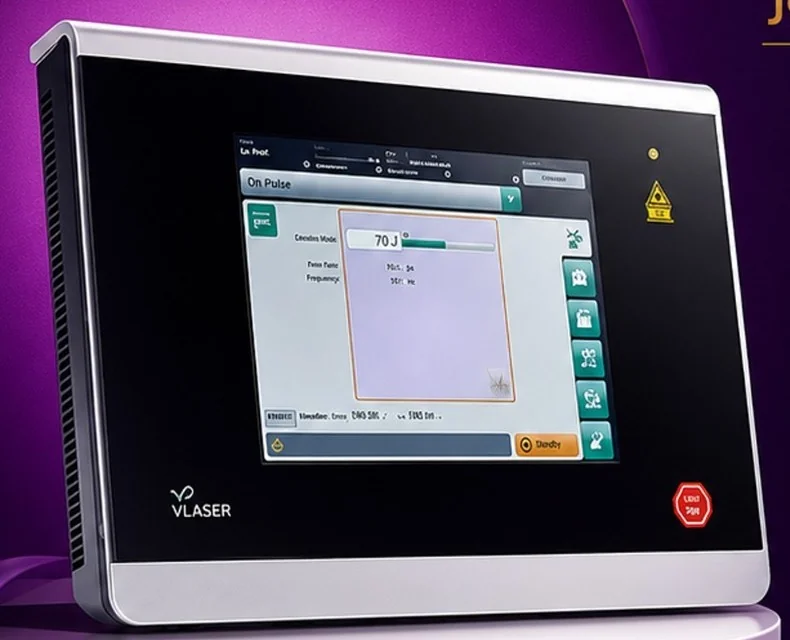
At Hemocure we use the German Leonardo Plus laser with a wavelength of 1940 nanometers. And a scientific review has pooled the results of 12 studies on 1,824 patients, and found that pain after LHP is less than after conventional surgery on the first day, the first week and the first month[5]. And for the full comparison read: Laser or conventional surgery?
Dr. Mohamed Magdy Elnaggar“El-Hekaya Fiha En” episode“There are no longer stitches, no wick and no packing such as we used to use… and so the patient no longer has severe pain after operations.”
The THD technique with Doppler
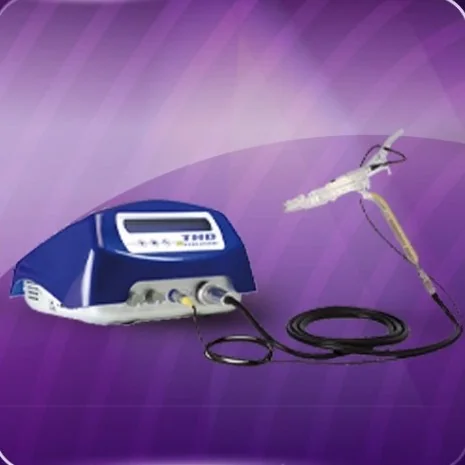
In the Italian THD technique the surgeon uses a Doppler device to identify the arteries that feed the hemorrhoids, then ties them off precisely. And if the hemorrhoids have come down, he lifts them back to their place. And a study that included several centers has shown that it is a safe and effective treatment[6].
What happens on the day of the operation? And how long does recovery take?
The operation is done inside the hospital: at Al-Rahma Hospital in Katameya, or at a Hemocure hospital in your governorate. You will be given a spinal anesthetic (Saddle Block) that numbs only the pelvic area, so you stay awake the whole time. And if you have another problem along with the hemorrhoids, such as a fissure or a fistula, it can be treated in the same operation.
| Duration of the operation | About 20 minutes in most cases, and it differs according to the grade and the technique |
|---|---|
| Discharge | Usually on the same day, after about 3 hours of checking on your condition |
| Return to work | After about 6 days on average, compared with two weeks to a month after conventional surgery |
| Follow-up | With the same surgeon, and free of charge until you recover completely |
How can you protect yourself from hemorrhoids?
Simple habits protect you from hemorrhoids, and reduce the chances of them coming back after treatment[1][3]:
- Eat more vegetables, fruit and whole grains, and drink enough water.
- Do not strain on the toilet, and do not sit on the toilet more than necessary.
- Treat constipation or diarrhea early.
- Move regularly. And here are the exercises that are useful and harmful for hemorrhoid patients.
Dr. Mohamed Magdy Elnaggar“El-Hekaya Fiha En” episode“The earlier we treat hemorrhoids, the much easier the operation becomes.”
Other videos with Dr. Mohamed Magdy Elnaggar
- Hemorrhoids and the ways to treat them — an interview on the “El-Nas El-Helwa” program (25:08)
- Hemorrhoids: a disease that changed the course of history (3:33)
- The difference between the old and the modern ways of treating hemorrhoids (5:07)
- Hemorrhoids — an extended explanation (27:23)
- Hemorrhoid disease — an interview with Dr. Ayman Rashwan (25:09)

Founder of Hemocure, and the first to introduce laser surgery of the anus and rectum in Egypt in 2014. Chairman of the Training Board of the International Society for Laser Surgery of the Anus and Rectum (ISLOP) and the global reference for surgery of the anus and rectum, and holder of the State Appreciation Award in 2018.
Scientific references
- Davis BR, Lee-Kong SA, Migaly J, Feingold DL, Steele SR. The American Society of Colon and Rectal Surgeons Clinical Practice Guidelines for the Management of Hemorrhoids. Dis Colon Rectum. 2018;61(3):284–292. https://doi.org/10.1097/DCR.0000000000001030
- van Tol RR, Kleijnen J, Watson AJM, et al. European Society of ColoProctology: guideline for haemorrhoidal disease. Colorectal Dis. 2020;22(6). https://doi.org/10.1111/codi.14975
- National Institute of Diabetes and Digestive and Kidney Diseases (NIDDK). Hemorrhoids: Symptoms & Causes, Treatment. https://www.niddk.nih.gov/health-information/digestive-diseases/hemorrhoids
- Arnold MJ, Smith D. Management of Hemorrhoids: Guidelines From the ASCRS. Am Fam Physician. 2025;112(6):694–695. https://www.aafp.org/pubs/afp/issues/2025/1200/practice-guidelines-hemorrhoids.html
- Systematic review and meta-analysis of postoperative pain and symptoms control following laser haemorrhoidoplasty versus Milligan-Morgan haemorrhoidectomy for symptomatic haemorrhoids: a new standard. Int J Colorectal Dis. 2022;37:1759–1771. https://doi.org/10.1007/s00384-022-04225-4
- Ratto C, Parello A, Veronese E, et al. Doppler-guided transanal haemorrhoidal dearterialization for haemorrhoids: results from a multicentre trial. Colorectal Dis. 2015. https://research.unipg.it/retrieve/e3aa200d-5107-ebae-e053-6605fe0a5b79/Ratto_et_al-2015-Colorectal_Disease.pdf
This article is for awareness, and does not replace a medical examination.
Book your examination
Have you noticed one of the symptoms we talked about? The examination is the first step to know the cause, the grade of the condition and the treatment that suits you. Booking online takes a minute, and if you would like to talk to us first, call the hotline.
Or call the hotline 15251, and the Hemocure team will set the appointment and the nearest branch with you.
The answers to the five most common questions about hemorrhoids — laser pain, treatment during pregnancy, hemorrhoids coming back after treatment, embarrassment about the examination, and consultation from outside Egypt — are in the frequently asked questions below.
Frequently Asked Questions
That does not mean you feel no pain at all — it varies from one patient to another depending on the case and the grade.
Surgery is not the usual option during pregnancy and is decided case by case with your obstetrician; if your case needs an operation, it is better done before pregnancy.
The risk drops a lot when you follow the prevention advice: fibre and water, no straining or long sitting on the toilet, and treating constipation early.
If you prefer a female doctor, Hemocure has a team of female doctors.