 English
 العربية


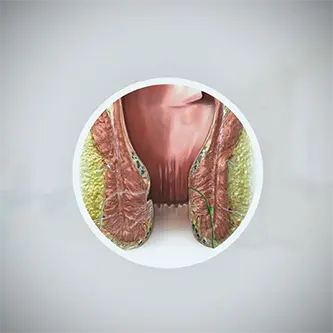
A recurrent abscess next to the anus, or a small opening that keeps discharging all the time? These are usually the signs of an anal fistula. It is a troublesome disease, and what worries patients most about it is the fear of losing bowel control after surgery. In this article we explain what a fistula is, why it happens, what types there are, why it needs an MRI before surgery, and how we treat it with laser and VAAFT without cutting the anal muscles.
What is an anal fistula?
An anal fistula is a small abnormal tract that connects two openings: an internal opening inside the anal canal, and an external opening in the skin around the anus[1]. The discharge comes out of the external opening. A fistula differs from one patient to another in two things: is the tract simple and straight, or branched? And how does it relate to the anal muscles responsible for continence?

It is a very old disease. In 1686 the King of France, Louis XIV, was affected by it, and his surgeon operated on him for three hours without any anesthesia, after having practiced the operation on other patients.
Dr. Mohamed Magdy ElnaggarVideo “The Story of the Anal Fistula”“The truth is it was a very rewarding experience for us, and it made us understand more what an anal fistula really means, and how much suffering there was, even among kings.”
And note: the name is close to pilonidal fistula, but it is a completely different disease that appears at the lower back and is usually not connected to the anus.
What are the symptoms of an anal fistula?
- A recurrent abscess next to the anus: a painful swelling that grows and then opens on its own or is opened.
- A small opening next to the anus that discharges most of the time: pus, or blood, and sometimes a little stool.
- Pain or discomfort around the anus, worse with sitting or when the discharge collects.
- Itching and irritation of the skin around the opening because of the discharge.
Dr. Mohamed Magdy ElnaggarVideo “Causes and Treatment Options for Anal Fistula”“All the time the patient gets recurrent abscesses around the anus, or he has discharge all the time from an external opening.”
When should you see a doctor?
See a doctor at the first abscess next to the anus, and do not wait for it to open on its own. An abscess needs prompt drainage[1], and treating it early and correctly reduces the chance of it turning into a fistula. Go to the emergency department immediately if the abscess is accompanied by a high fever or severe pain that worsens quickly.
Why does an anal fistula happen?
In most cases the story begins with a small gland inside the anal canal that becomes inflamed, and an abscess forms around it. The abscess opens a path for itself to the skin so the pus can come out. When the inflammation settles, this path stays open as a tract, and that is the fistula. This is why a fistula is often linked to a previous abscess. In fewer cases it may be linked to other diseases, such as Crohn's disease[1].
What are the types of anal fistula?
Fistulas are classified by their course in relation to the anal muscles. Around the anus there is an internal muscle and an external muscle, and above them the pelvic muscles. The more muscles a fistula passes through or the higher it goes, the greater the precision the treatment requires:
| Type | Its course | Degree of complexity |
|---|---|---|
| 1. Simple fistula | A superficial tract that does not pass through the continence muscles around the anal opening | Simple |
| 2. Intersphincteric | Passes between the internal and external muscles without crossing the external muscle | Moderate |
| 3. Transsphincteric | Passes through both the internal and external muscles | Requires care to preserve the muscles |
| 4. Suprasphincteric | Runs above the external muscle before reaching the skin | Complex |
| 5. Extrasphincteric | Passes outside the continence muscles and connects the rectum to the skin | Complex |
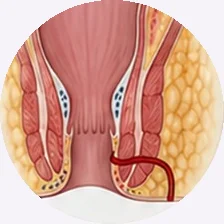


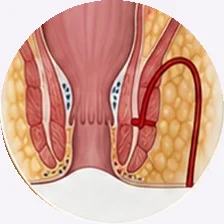
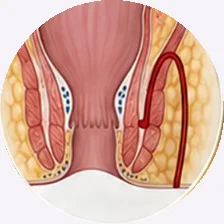
Sometimes the fistula wraps from one side to the other behind the rectum, and is called a “horseshoe fistula” (Horseshoe), and it is one of the complex types.
Dr. Mohamed Magdy ElnaggarVideo “What Is an Anal Fistula? And What Types Are There?”“An anal fistula is one of the things that is very, very important to treat with a correct treatment plan.”
How is an anal fistula diagnosed?
Diagnosis starts with an examination in the clinic, where the doctor sees the external opening and assesses its position. But the examination alone is not enough to know the course of the tract under the skin: is it straight or branched? And which muscles does it pass through? That is why, before surgery, we request an MRI of the pelvis, as it is the best test for mapping the fistula's course and its branches and its relation to the anal muscles[4]. On that basis we choose the appropriate treatment method.
Dr. Mohamed Magdy ElnaggarVideo “The Story of the Anal Fistula”“We identify all grades of anal fistula by doing an MRI, which has become very important in surgery.”
And during the operation itself, the VAAFT camera reveals every detail of the tract from the inside, as you will read in Treatment.
What happens if you neglect an anal fistula?
A fistula usually does not close on its own, and leaving it may make the problem bigger:
- Recurrent abscess whenever the external opening blocks and the pus collects.
- Branching of the fistula and the appearance of new tracts and openings, which makes treatment harder.
- Extension of the fistula over long distances in complex cases, sometimes reaching 10 or 15 centimeters, and it may sometimes reach the scrotum in men or the vagina in women.
Dr. Mohamed Magdy ElnaggarVideo “Complicated Anal Fistula and Its Complications”“We have come to operate on patients with types of fistula, very large sizes, 10 cm and 15 cm, and a fistula with four or five branches.”
On the other hand, a poorly planned operation may lead to a problem more serious than the fistula itself, namely poor bowel control if a large part of the anal muscles is cut. This is why the correct treatment plan matters before any intervention.
How is an anal fistula treated?
A fistula is not treated with medication; antibiotics are used only in certain cases of abscess, such as widespread inflammation of the skin or a weakened immune system[1], but they do not close the tract. The choice of treatment depends on the type of fistula as it appears on the MRI:
| Method | Suitable for | The idea in brief |
|---|---|---|
| Laser (FiLaC) | A fistula with a straight tract | Closing the internal opening, then cauterizing the tract from the inside without cutting the muscles |
| VAAFT with laser | A branched or complex fistula | A camera sees all the branches, then all of them are cauterized with the laser |
| Traditional surgery | Some very simple cases | Opening or excising the tract, which may require cutting part of the muscles |
Laser treatment with the FiLaC technique
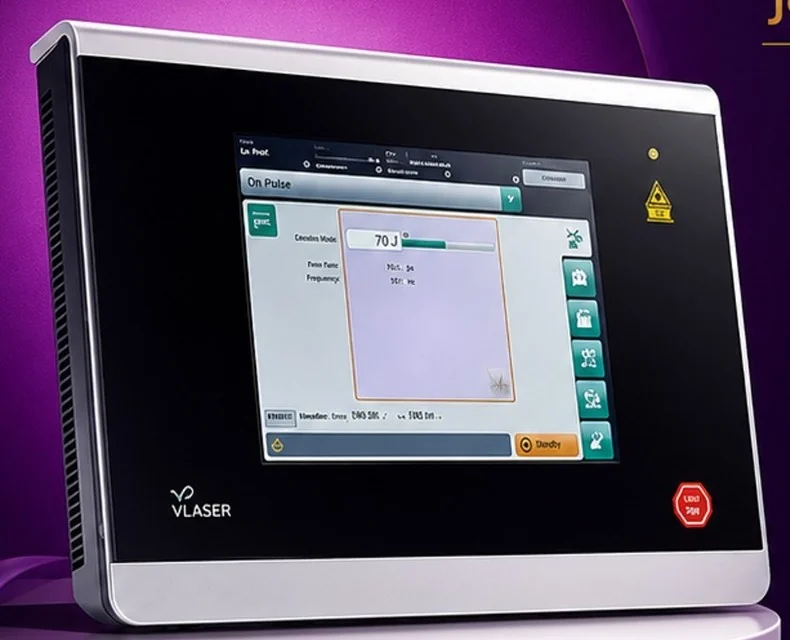
At Hemocure we treat fistula with the FiLaC (Fistula Laser Closure) technique using the German Leonardo Plus laser device. The procedure is performed in steps:
- Cleaning the tract of all discharge through the external opening.
- Passing a guide thread that pulls the laser catheter along the correct path from the external opening to the internal one.
- Closing the internal opening with a stitch, which the body absorbs on its own afterward.
- Cauterizing the tract with the laser from the inside to the outside, part by part, until it shrinks and heals.
The idea is that the laser closes the tract from within, so we do not need to cut the muscles around it; this is why this technique is considered one of the methods that preserve the anal muscles[2].
How many stages is the treatment done in?
Each type of fistula has its own treatment plan, and it is that plan which determines whether treatment is done in one stage or more. The doctor sets this plan after the examination and diagnosis with MRI.
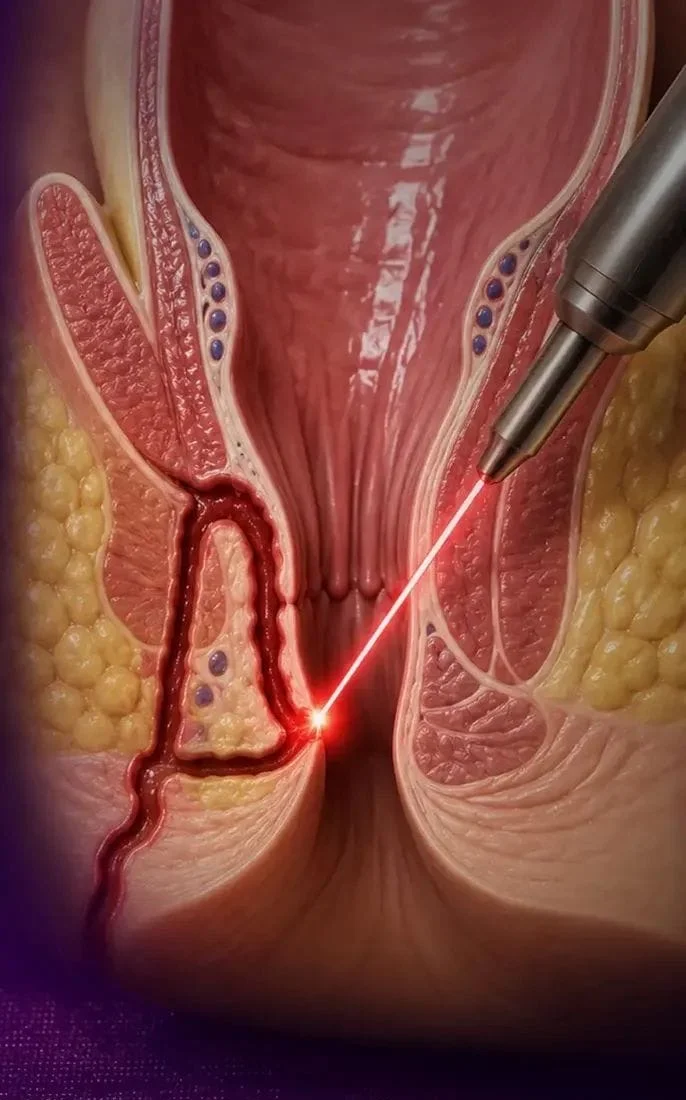
Dr. Mohamed Magdy ElnaggarVideo “Causes and Treatment Options for Anal Fistula”“But for us to do that, the fistula has to be a straight tract and not branched or tortuous.”
VAAFT for branched fistula
If the fistula is branched, laser alone is not enough. Here we use VAAFT: an endoscope with a very small camera that enters through the external opening and travels inside the tract, so the surgeon sees every branch and where it starts on the screen. Then we cauterize the main tract and all the branches with the laser, and close the internal opening. A systematic scientific review found that VAAFT helps locate the internal opening in most cases, and that it is a safe method for treating complex and high fistula with a low complication rate[3].
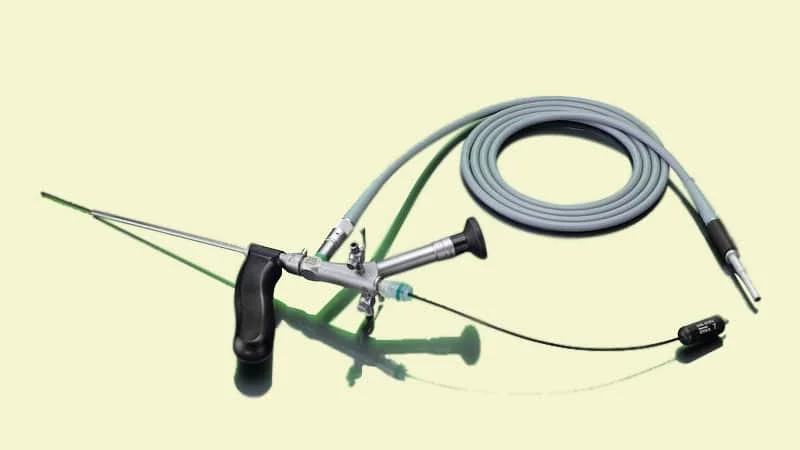
In very complex cases, we may add to laser and VAAFT precise surgical interventions that do not touch the continence muscles, such as disconnecting the part near the anus or ligating the tract in the space between the two muscles (LIFT). This is what Dr. Mohamed calls a “hybrid” treatment.
Dr. Mohamed Magdy ElnaggarVideo “Causes and Treatment Options for Anal Fistula”“Fistula treatment has become a hybrid technique, meaning we can treat it with more than one technology.”
Traditional surgery
Traditional surgery relies on opening or excising the tract. In a simple fistula that does not pass through many muscles, the American guidelines consider it an appropriate treatment for patients who do not have a muscle problem[1]. But the more muscles the fistula passes through, the greater the risk that cutting will affect bowel control. This is why at Hemocure we rely on laser and VAAFT in most cases.
Dr. Mohamed Magdy ElnaggarVideo “Causes and Treatment Options for Anal Fistula”“We used to treat anal fistula with traditional surgery… and if we cut it, we cut part of the muscle, and from there comes the big nightmare called incontinence.”
What happens on the day of surgery?
The operation is performed in the hospital under a saddle block that numbs only the pelvic area, so you stay awake the whole time.
| Procedure duration | From 10 minutes to a quarter of an hour for a simple fistula, and about half an hour for a complex one |
|---|---|
| After the operation | A short stay in the recovery room, then your room |
| Discharge | The same day, in about two to three hours |
| Return to normal life | In about two to three days |
| The wound | No wick and no packing |
Tips after treatment
- Keep your follow-up appointments with the doctor until the fistula heals completely.
- Keep the area clean and dry, especially in the first days.
- Treat any new abscess early with the doctor, and do not try to open it yourself.
- Avoid constipation and diarrhea with fiber-rich food and drinking water.
- Keep treating any chronic disease of the colon, such as Crohn's, if present.
More videos with Dr. Mohamed Magdy Elnaggar
- What Is an Anal Fistula and How Is It Treated? — Extended episode (26:39)
- Anal Fistula: Causes, Symptoms and Treatment Options — Extended episode (25:23)
- Ten Minutes on Treating Anal Fistula: Treatment Techniques (24:46)
- What Is an Anal Fistula? And Can It Be Treated with Laser? (14:24)
- How Do We Treat Anal Fistula with the VAAFT Technique? (0:45)
- Anal Fistula with Laser (1:43)

Founder of Hemocure, and the first to introduce laser anorectal surgery in Egypt in 2014. Chairman of the Training Board of the International Society for Laser Anorectal Surgery (ISLOP) and the global reference in anorectal surgery, and a recipient of the State Appreciation Award in 2018.
Read more
- Hemorrhoids: Symptoms, Grades and Treatment Options
- Anal Fissure: Symptoms, Causes and Treatment Options
Scientific references
- Gaertner WB, Burgess PL, Davids JS, et al. The American Society of Colon and Rectal Surgeons Clinical Practice Guidelines for the Management of Anorectal Abscess, Fistula-in-Ano, and Rectovaginal Fistula. Dis Colon Rectum. 2022;65(8):964–985. https://guidelinecentral.com/guideline/1971902
- Elfeki H, Shalaby M, Emile SH, Sakr A, Mikael M, Lundby L. A systematic review and meta-analysis of the safety and efficacy of fistula laser closure. Tech Coloproctol. 2020;24(4):265–274. https://doi.org/10.1007/s10151-020-02165-1
- Emile SH, Elfeki H, Shalaby M, Sakr A. A systematic review and meta-analysis of the efficacy and safety of video-assisted anal fistula treatment (VAAFT). Surg Endosc. 2018;32:2084–2093. https://doi.org/10.1007/s00464-017-5905-2
- Torkzad MR, Karlbom U. MRI for assessment of anal fistula. Insights Imaging. 2010;1(2):62–71. https://doi.org/10.1007/s13244-010-0022-y
This article is for awareness, and does not replace a medical examination.
Book your consultation
Do you have a recurrent abscess or discharge next to the anus? The earlier you treat a fistula, the simpler and less branched it is. Booking online takes a minute, and if you would like to talk to us first, call the hotline.
or call the hotline 15251, and the Hemocure team will set the appointment and the nearest branch with you.
Answers to the most common questions about the condition — from pain and diagnosis, to treatment and getting back after surgery — in the Frequently asked questions below.