 English
 العربية


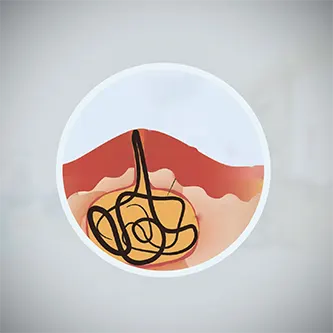
What is Pilonidal Sinus?
Pilonidal sinus, also known as pilonidal disease or pilonidal cyst, is a condition that involves
the formation of a small tunnel or cavity in the skin, typically in the sacrococcygeal area
(near the tailbone). It occurs when hair follicles become infected or inflamed, leading to the
development of a sinus tract.
Causes of Pilonidal Sinus:
The exact cause of pilonidal sinus is not fully understood, but several factors contribute to its
development, including:
- Hair growth: Excessive hair growth, particularly in the affected area, can increase the
- likelihood of hair follicles getting trapped and causing an infection.
- Friction or pressure: Constant friction or pressure on the sacrococcygeal area, such as from
- prolonged sitting or trauma, can lead to the formation of a pilonidal sinus.
- Congenital factors: Some individuals may have a predisposition to pilonidal sinus due to
- congenital factors that affect the shape or structure of the sacrococcygeal area.
Symptoms of Pilonidal Sinus:
The symptoms of pilonidal sinus can vary depending on the severity of the condition.
Common signs and symptoms include:
- Pain and swelling: The affected area may be painful, tender, or swollen.
- Abscess formation: Pus-filled abscesses may develop, causing increased pain and discomfort.
- Discharge: The sinus may produce a foul-smelling discharge, which may contain blood, pus, or hair.
- Redness and inflammation: The skin around the sinus opening may appear red and inflamed.
State-of-the-Art Treatment for Pilonidal Sinus:
Over the years, advancements in medical technology and surgical techniques have
improved the treatment options for pilonidal sinus.
At hemocure we use the latest technology. Some of our state-of-the-art treatments include:
SiLaC
(Sinus Laser Closure) is a minimally invasive procedure for treating pilonidal sinus disease.
It is performed under local anesthesia and may be associated with V.A.A.F.T in some cases
and typically takes about 15 minutes. The procedure involves using a laser to ablate the
pilonidal sinus tract and surrounding tissue. This seals the sinus tract and prevents it from
recurring.
SiLac
It is important to note that the choice of treatment depends on the severity and complexity of
the pilonidal sinus.
Share :
Related Topics
Pilonidal fistula is one of the most painful diseases Imagine how it is treated? Learn about Pilonidal Sinus disease
WHAT IS A PILONIDAL SINUS AND WHAT ARE ITS CAUSES AND METHODS OF TREATMENT?
PILONIDAL SINUS DURING PREGNANCY
WHAT ARE THE SYMPTOMS OF PILONIDAL SINUS
PILONIDAL SINUS – WOMEN & MEN
Pilonidal Sinus in Children: Causes, Symptoms, and Treatment Techniques
What is Pilonidal Sinus, and How is it Treated?
Pilonidal Sinus: Symptoms, Causes, Treatment, and Prevention
The cost of pilonidal sinus surgery with laser or surgery is 2026
علاج الناسور العصعصي في المنزل | الحقيقة وراء الشائعات
Pilonidal Sinus: Causes and Who is Most at Risk