 English
 العربية


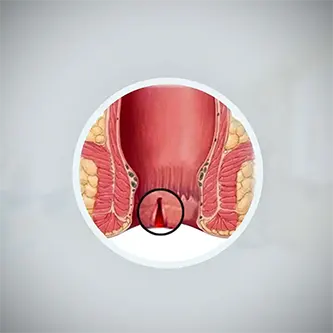
Sharp pain every time you go to the bathroom, fear of the bathroom itself, and a spot of blood on the tissue? These are usually the signs of an anal fissure. The good news is that it is one of the easiest anal conditions to treat if it is caught early. In this article we explain what a fissure is, why it happens, how to tell it apart from hemorrhoids, and when medication is enough and when you need laser treatment.
What is an anal fissure?
An anal fissure is a small longitudinal wound in the thin mucous membrane that lines the anal opening from the inside. In 73% of cases it is in the posterior midline of the anus[2]. The reason for its severe pain is that stool passes over the wound every time:
Dr. Mohamed Magdy Elnaggar«Tob Ala El-Saboura» episode“Even though it is such a simple condition, it is very, very painful… because every little while he will be in the bathroom, so every little while it will hurt.”
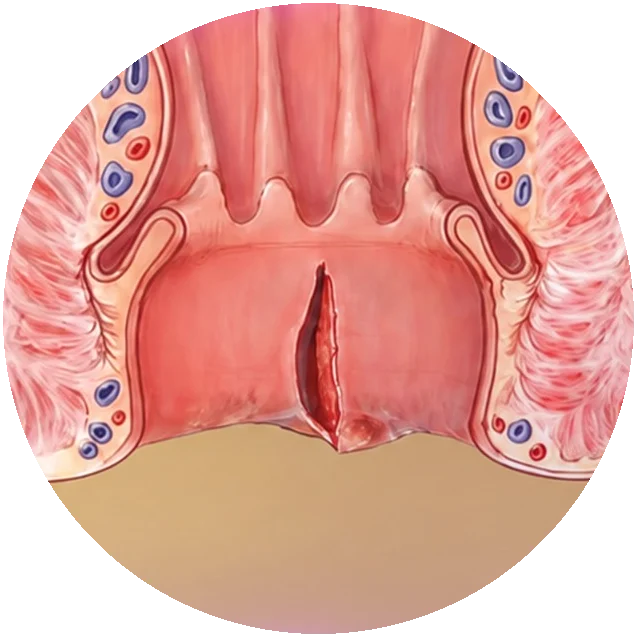
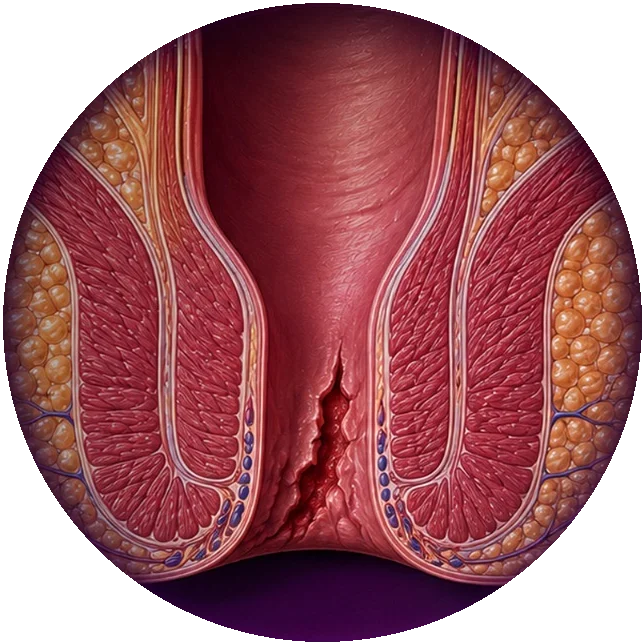
A fissure has two types, and the difference between them is what determines the treatment:
| Acute fissure | Chronic fissure | |
|---|---|---|
| Duration | Recent, within the first 6 weeks | Ongoing for more than 6 weeks, and may extend for years |
| Wound appearance | A fresh wound with soft edges | A fibrotic wound with hard edges |
| Additional signs | Usually none | A small skin tag at the opening, and sometimes a mucosal tag from the inside |
| Predominant symptoms | Severe pain and spots of blood | Tightness in the anus that is more severe than the pain, and less blood |
| Treatment | Medication is usually enough | Needs an intervention |
What are the symptoms of an anal fissure?
- Sharp pain like a cut or a sting during bowel movement, which may last for hours afterward[2].
- Spots of bright red blood on the stool or on the tissue.
- A feeling of tightness or spasm in the anus, because the muscles contract to protect the wound.
- Fear of going to the bathroom and putting it off, which increases constipation and makes the problem worse.
Dr. Mohamed Magdy Elnaggar«El-Hekaya Fiha En» episode“Everybody knows that when I go into the bathroom I take a long time and sit for a while and it hurts a bit, and every two or three months I go and buy medicine.”
When should you see a doctor?
See a doctor with the first recurring pain in the bathroom, because the first six weeks are your golden chance to be treated with medication. And never delay if the fissure is on the side of the anus and not at the front or the back, or if there is more than one fissure; this unusual type may be linked to other conditions such as Crohn's disease or tuberculosis, and it needs examination and testing[2]. This may also help you: Does blood with stool always mean hemorrhoids?
Why does an anal fissure happen?
A fissure is a mechanical injury; that is, a wound that happens when the thin membrane is exposed to strong pressure or stretching. Its most common causes are:
- Constipation and hard stool, and severe straining.
- Recurrent diarrhea.
- Drinking too little water, and eating a lot of starches and white flour such as pizza and pastries.
- Vaginal delivery in some women.
- Inflammatory bowel diseases such as Crohn's.
Can you have a fissure and hemorrhoids at the same time?
Yes, and this is very common. Dr. Mohamed says that most patients who come in with a fissure also have hemorrhoids. The reason is that the two share the same trigger: constipation and straining. In fact, the fissure itself may cause hemorrhoids:
Dr. Mohamed Magdy ElnaggarInterview with Dr. Ayman Rashwan“Trying to push something wide out of something narrow presses on the blood vessels and creates hemorrhoids… if he had not had a fissure, he would not have had hemorrhoids.”
So the fissure makes the anal muscles contract and narrow the opening, which forces the patient to strain more, so the blood vessels swell and secondary hemorrhoids appear. Also, the skin tag that appears with a chronic fissure may be mistaken by the patient for external hemorrhoids. That is why this table helps you tell the difference:
| Anal fissure | Internal hemorrhoids | |
|---|---|---|
| Pain | Sharp and severe during bowel movement and after it | Usually painless |
| Blood | A few spots on the tissue | May be more, and covers the stool or drips |
| Protrusion | A small fixed skin tag in the chronic fissure | Tissue that comes down with bowel movement in advanced grades |
| Sensation | Tightness and spasm at the opening | Heaviness or discomfort when sitting |
That is why treating hemorrhoids alone is not enough if there is a fissure with them; hemorrhoid creams will not heal the fissure, and the tightness will keep pressing on the vessels. It is better for the doctor to determine during the examination whether you have only a fissure or a fissure and hemorrhoids. And if you need surgery, both can be treated together in one operation under one anesthesia; the laser fibers that treat the fissure are the same ones that treat hemorrhoids, and the whole operation takes about 10 minutes to a quarter of an hour. A recent study has shown that treating hemorrhoids and a chronic fissure in one operation is safe and suitable for carefully selected patients[4]. For the detailed comparison read: How do you tell hemorrhoids apart from an anal fissure?
How is an anal fissure diagnosed?
A fissure is diagnosed in the clinic by clinical examination[1]. In Hemocure branches equipped with the proctostation device, the doctor uses a high-resolution camera that is placed at the anal opening from the outside and magnifies the image 16 times. With this examination the doctor knows:
- Whether the fissure is acute or chronic.
- Whether there are hemorrhoids or another problem with it.
- The degree of anal tightness, which is what determines the treatment approach in the operation.

What happens if you ignore a fissure?
A fissure is a small wound, but ignoring it may make the problem bigger:
- It turns into a chronic fissure that does not heal with medication.
- It gets infected and an abscess forms next to the anus.
- The abscess turns into an anal fistula, which needs a bigger procedure. Read about anal fistula.
- Secondary hemorrhoids appear because of anal tightness, as we explained above.
Dr. Mohamed Magdy ElnaggarInterview with Dr. Ayman Rashwan“An anal fissure is a simple thing and an easy thing, but ignoring it or not treating it well creates things much bigger than it and much more dangerous than it.”
How is an anal fissure treated?
Treatment depends on the age of the fissure:
| Approach | Suits | The idea in brief |
|---|---|---|
| Medication and diet adjustment | Acute fissure | Relaxing the anal muscle and increasing blood flow to the wound so that it heals |
| Laser | Chronic fissure | Cauterizing the fibrotic wound and lengthening the muscle without cutting it |
| Traditional surgery (not performed at Hemocure) | Chronic fissure | Cutting part of the internal muscle to widen the anus |
Treatment with medication
Treatment of an acute fissure always begins without surgery, and this is the recommendation of the American Society of Colon and Rectal Surgeons guidelines[1]. With fiber and sitting in warm water, about half of acute fissure cases heal[2]. Depending on your case, the doctor prescribes:
- Ointments that relax the anal muscle and increase blood flow to the wound, such as nitroglycerin or topical calcium channel blockers, the latter having fewer headaches as a side effect[2].
- Laxatives to treat constipation, or treatment for diarrhea if present.
- Pain relievers.
Dr. Mohamed Magdy Elnaggar«Anal Fissure: Causes and Treatment Options» video“If we take the treatment properly we will get better; if we do not take the treatment properly, the anal fissure will turn from acute to chronic.”
As for the chronic fissure, medication only relieves the symptoms with it: it calms the pain and the itching and stops the bleeding, but it does not heal the fibrotic wound.
Treatment with laser
At Hemocure, the chronic fissure is treated with laser in simple steps:
- The laser beams are directed from a close distance at the fissure, without the catheter touching the wound, so they cauterize the fibrotic tissue so that the wound heals.
- The skin tag is removed with the laser if present.
- The anal muscle is lengthened to widen the opening, without cutting it.
For this we use the German Leonardo Plus laser device, which is the same device we treat hemorrhoids with. We do not cut the anal muscle in any case.
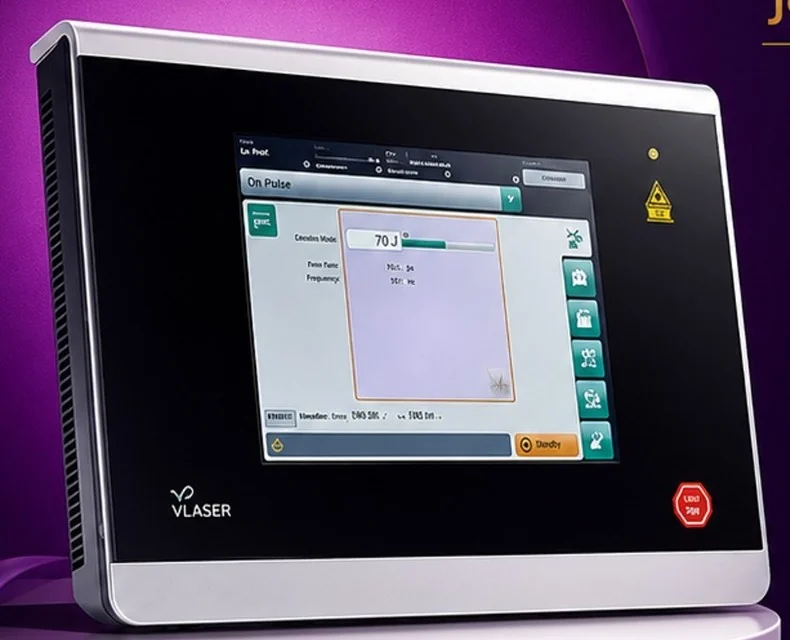
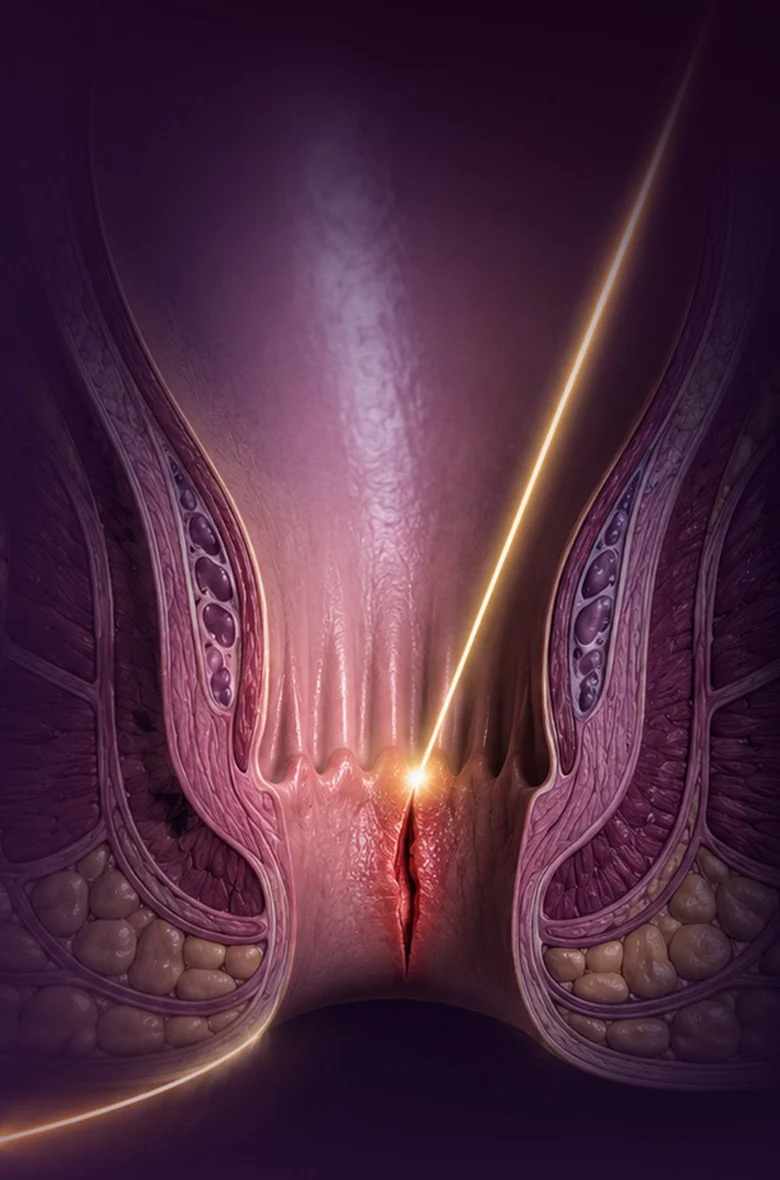
Dr. Mohamed Magdy Elnaggar«Anal Fissure Surgery» video“We no longer cut anything or ever interfere with the muscles; on the contrary, we lengthen the anal muscle without cutting it.”
Traditional surgery
International guidelines consider cutting part of the internal anal muscle (Lateral Internal Sphincterotomy) the standard surgical treatment for the chronic fissure, because of its good results in healing the wound[1][3]. But cutting the muscle is what worries patients, as you will find in the frequently asked questions, and that is why we do not perform this surgery at Hemocure and rely on laser instead. In the interest of scientific honesty: the studies comparing laser with this surgery are still fewer in number.
What happens on the day of surgery?
The operation is performed in the hospital under a saddle block that numbs the pelvic area only, so you stay awake the whole time.
| Procedure duration | A few minutes, in the range of 5 minutes for the fissure alone |
|---|---|
| After the operation | About 10 minutes in the recovery room, then an hour or two in your room |
| Discharge | The same day |
| Return to normal life | Within one to three days |
| After the operation | No drain, no packing, and no stitches |
How can you prevent a fissure?
Since constipation and diarrhea are the most common causes of a fissure, prevention starts from your plate:
- Eat plenty of vegetables and leafy greens, and drink enough water.
- Reduce white flour, fried foods, chili, and hot spices.
- Be careful with fruits that have many seeds, such as guava, prickly pear, and unfiltered pomegranate, as they may increase constipation in some people.
- Do not put off going to the bathroom, and do not strain hard.
Dr. Mohamed Magdy ElnaggarInterview with Dr. Ayman Rashwan“Diseases do not wear us down as much as human behaviors are what wear us down.”
More videos with Dr. Mohamed Magdy Elnaggar
- Anal fissure and how it is treated — Tob Ala El-Saboura (2:47)
- Anal fissure with laser — extended explanation (24:01)

Founder of Hemocure, and the first to introduce laser anal and rectal surgery in Egypt in 2014. Chairman of the Training Board of the International Society for Laser Surgery of the Anus and Rectum (ISLOP) and the international reference for anal and rectal surgery, and recipient of the State Appreciation Award in 2018.
Read more
- Hemorrhoids: symptoms, grades, and treatment options
- Anal fistula: symptoms, types, and treatment options
- Pilonidal fistula: symptoms, causes, and treatment options
Scientific references
- Davids JS, Hawkins AT, Bhama AR, et al. The American Society of Colon and Rectal Surgeons Clinical Practice Guidelines for the Management of Anal Fissures. Dis Colon Rectum. 2023;66(2):190–199. https://guidelinecentral.com/guideline/2419059
- Arnold MJ. Management of Anal Fissures: Guidelines From the American Society of Colon and Rectal Surgeons. Am Fam Physician. 2024;109(2):188–189. https://www.aafp.org/pubs/afp/issues/2024/0200/practice-guidelines-anal-fissures.html
- Asefa Z, Awedew AF. Comparing closed versus open lateral internal sphincterotomy for management of chronic anal fissure: systematic review and meta-analysis of randomised control trials. Sci Rep. 2023;13:20957. https://doi.org/10.1038/s41598-023-48286-z
- Gefen R, Handal A, Ben-Ezra C, Parnasa SY, et al. Utilization of a Combined Procedure for Hemorrhoids and Chronic Anal Fissure Is Safe and Feasible. 2025. https://www.mdpi.com/2673-4095/6/4/85
- Davis BR, Lee-Kong SA, Migaly J, Feingold DL, Steele SR. The American Society of Colon and Rectal Surgeons Clinical Practice Guidelines for the Management of Hemorrhoids. Dis Colon Rectum. 2018;61(3):284–292. https://doi.org/10.1097/DCR.0000000000001030
This article is for awareness, and it does not replace a medical examination.
Book your consultation
Do you feel pain when you go to the bathroom? The earlier you are examined, the better your chance of treatment with medication without surgery. Booking online takes a minute, and if you would like to talk to us first, call the hotline.
or call the hotline 15251, and the Hemocure team will set up your appointment and the nearest branch with you.
Answers to the most common questions about the condition — from pain and diagnosis to treatment and getting back to normal after the operation — are in the frequently asked questions below.