 English
 العربية


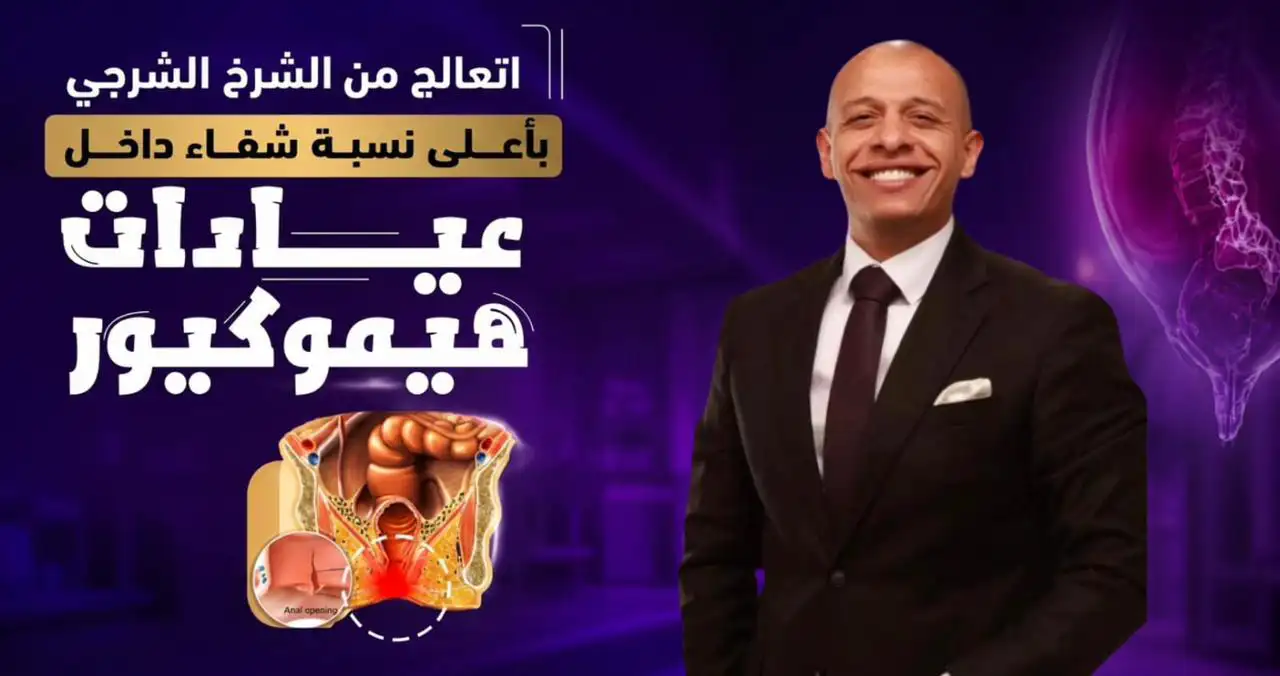
Prof. Mohamed Magdy El-Naggar | Hemocure | Anal Fissure Treatment with the German Leonardo Plus Laser
Written by: Hemocure Medical Team
Reviewed by: Prof. Mohamed Magdy El-NaggarSpecialist in Colorectal and Anorectal Surgery — First Surgeon to Introduce Laser Treatment for Anorectal Diseases in Egypt (2014) — Recipient of the State Excellence Award in Medicine (2018) — Chairman of the International Training Board of ISOLP.
Table of Contents
-
Anal Fissure — The Condition Many Suffer From but Rarely Discuss
-
Stages of Anal Fissure and When Intervention Is Needed
-
Symptoms That Should Never Be Ignored
-
Criteria for Choosing the Best Anal Fissure Doctor in Egypt
-
Why Does Prof. Mohamed Magdy El-Naggar Deserve This Title?
-
Laser Treatment for Anal Fissures — Inside the Operating Room
-
Sphincter Stretching Without Cutting — The Major Advantage
-
Comparison: Laser vs. Traditional Surgery
-
The Hemocure Patient Journey Step by Step
-
Can Anal Fissures Be Treated Without Surgery?
-
Hemocure in Numbers and Locations
-
Frequently Asked Questions
Anal Fissure — The Condition Many Suffer From but Rarely Discuss
"Every day at Hemocure, a new patient comes to me and says: 'Doctor, I spent a long time searching before I finally came here.' I ask, 'Why did you wait so long?' The answer is usually: 'I was afraid of surgery and didn't know how to choose the right doctor.'"
— Prof. Mohamed Magdy El-Naggar
An anal fissure is a tear or ulcer in the lining of the anal canal. While it is not a life-threatening condition, neglecting treatment can significantly affect a person's quality of life.
Despite being one of the most common anorectal conditions, many patients delay seeking medical care because of embarrassment or fear of surgery.
Searching for the best anal fissure doctor in Egypt is not simply about finding a well-known name. It is about finding a specialist who thoroughly understands the condition and possesses modern treatment options that often eliminate the need for traditional surgery.
Types of Anal Fissures
Acute Anal Fissure
An acute fissure typically develops suddenly after passing hard stool or excessive straining during bowel movements. In many cases, it heals within a few weeks through conservative treatment, provided that medical intervention occurs early.
Chronic Anal Fissure
A chronic fissure persists for more than six weeks without healing. It is usually associated with fibrosis at the wound edges and continuous spasm of the internal anal sphincter, which restricts blood flow and prevents natural healing.
This type often requires specialized intervention, and the best anal fissure doctor knows precisely when conservative treatment is sufficient and when advanced treatment becomes necessary.
Stages of Anal Fissure — When Is Treatment Necessary?
One of the most common misconceptions among patients is that every anal fissure requires surgery. In reality, many acute fissures respond successfully to conservative management when diagnosed accurately from the beginning.
| Stage | Condition | Main Symptoms | Recommended Treatment |
|---|---|---|---|
| Stage 1 | Early Acute Fissure | Mild pain during bowel movements | Conservative treatment |
| Stage 2 | Recurrent Acute Fissure | Noticeable pain with mild bleeding | Intensive conservative treatment |
| Stage 3 | Chronic Fissure | Severe pain, fibrosis, muscle spasm | Laser LIS |
| Stage 4 | Chronic Fissure with Skin Tags | Severe pain with skin tags | Detailed evaluation + Laser |
The best anal fissure doctor is not the one who performs the most procedures, but the one who knows when intervention is unnecessary.
Symptoms That Should Never Be Ignored
Any one of the following symptoms warrants consultation with a specialized colorectal surgeon rather than relying on home remedies or pharmacy advice:
-
Sharp or burning pain during or after bowel movements that may last from minutes to several hours.
-
Bright red blood on toilet paper.
-
Noticeable anal muscle spasm that intensifies pain.
-
Persistent itching or burning sensation around the anus.
-
Avoiding bowel movements due to fear of pain, which worsens constipation and delays healing.
A Key Sign of Chronic Anal Fissure
If the pain feels as though it originates deep inside the anal canal rather than from the external area alone, and if you experience persistent muscle spasm even during rest, you may be dealing with a chronic fissure that requires specialized treatment.
Criteria for Choosing the Best Anal Fissure Doctor in Egypt
When searching for the best anal fissure specialist in Egypt, there are five essential questions every patient should ask.
1. Is the Doctor Dedicated to Colorectal and Anorectal Diseases?
An anal fissure is not simply another surgical condition. A true specialist understands the delicate anatomy of the anal sphincter and knows how to achieve healing while minimizing risks and complications.
2. Does the Clinic Use Specialized Diagnostic Equipment?
Accurate diagnosis is the foundation of successful treatment.
The Proctostation system measures anal sphincter pressure and accurately determines the severity of the fissure. This information often guides the decision between conservative management and laser treatment.
Relying solely on manual examination may not always provide sufficient information.
3. Does the Doctor Fully Explain the Treatment Plan?
The best anal fissure doctor does not rush patients into procedures.
Instead, they explain the diagnosis, discuss available treatment options, outline expected outcomes, and ensure that the patient fully understands every step before treatment begins.
Transparency builds trust.
4. Are Modern Non-Surgical Treatment Options Available?
Traditional surgery was once the only option for chronic fissures.
Today, laser treatment has become one of the most advanced approaches worldwide because it is generally faster, less painful, and associated with a quicker recovery.
The best anal fissure doctor should be experienced in these modern techniques.
5. Is There Structured Follow-Up After Treatment?
Treatment does not end when the patient leaves the operating room.
Long-term success depends on dietary guidance, bowel habit management, monitoring wound healing, and addressing any concerns promptly.
Comprehensive follow-up is an essential component of quality care.
Why Does Prof. Mohamed Magdy El-Naggar Deserve the Title of Best Anal Fissure Doctor in Egypt?
Prof. Mohamed Magdy El-Naggar is not considered one of the leading anal fissure specialists in Egypt because of marketing claims or advertising campaigns. His reputation is built on years of clinical practice, international recognition, scientific contributions, and physician training.
The milestones below speak for themselves:
| Year | Achievement |
|---|---|
| 2014 | First surgeon to introduce laser treatment for anorectal diseases in Egypt in collaboration with the German company Biolitec |
| 2018 | Recipient of the State Excellence Award in Medicine |
| 2019 | Internationally recognized authority in laser treatment of anorectal diseases |
| 2019 | Chairman of Training, ISOLP (International Society of Laser Proctology) |
| 2022 | Opening keynote speaker at the PROCTOCOM Conference in Cyprus, selected among a limited group of leading surgeons worldwide |
| 2023 | Opening keynote speaker at the PROCTOCOM Conference in Málaga, Spain |
| 82+ | International training workshops conducted for surgeons from around the world |
What truly distinguishes Prof. El-Naggar is that he does not only treat patients—he trains other surgeons on advanced laser techniques. This is the hallmark of a genuine reference expert in the field.
Laser Treatment for Anal Fissures — Inside the Operating Room
Prof. Mohamed Magdy El-Naggar explains the procedure in simple terms:
"Anal fissure surgery is one of the simplest procedures performed in the operating room. A laser fiber is inserted into the fissure, and laser energy is delivered without the fiber actually touching the fissure itself. Nothing directly touches the anal tissue—the treatment is performed remotely using laser energy."
— Prof. Mohamed Magdy El-Naggar
From a medical perspective, a fine laser fiber is introduced into the fissure and delivers laser energy at a wavelength of 1940 nm.
This energy:
-
Stimulates tissue regeneration and healing.
-
Improves local blood circulation.
-
Reduces chronic sphincter spasm.
-
Promotes natural wound closure.
-
Preserves surrounding healthy tissues.
As the sphincter gradually relaxes, blood flow returns to normal levels, allowing the fissure to heal naturally.
This principle forms the foundation of Laser LIS (Laser Internal Sphincterotomy) performed with the Leonardo Plus laser system.
Leonardo Plus Laser System — Why Is It Different?
The Leonardo Plus platform offers several technical advantages:
-
1940 nm wavelength for precise tissue interaction.
-
Exceptional accuracy in delicate anorectal tissues.
-
Controlled penetration depth of approximately 1 mm.
-
Dual-emission fiber technology for improved energy distribution.
-
Procedure time often under 10 minutes.
-
Return to normal activities within one to two days in many cases.
Hemocure became one of the first centers in the Middle East to introduce this technology in 2014.
Sphincter Stretching Without Cutting — The Major Advantage
One of the most important differences between modern laser treatment and traditional surgery lies in how the anal sphincter muscle is managed.
Prof. El-Naggar explains:
"With conventional surgery, surgeons often had to enlarge the anal canal by cutting a portion of the sphincter muscle. This was the source of many patient concerns regarding weakness or bowel control issues. Today, with laser technology, we no longer need to cut the muscle. Instead, we achieve controlled relaxation and stretching without cutting any muscle fibers."
— Prof. Mohamed Magdy El-Naggar
This approach significantly reduces the risks historically associated with traditional surgery.
Rather than weakening the sphincter through surgical division, laser therapy promotes muscle relaxation while preserving normal anatomy and function.
For many patients, this represents one of the most reassuring aspects of modern laser treatment.
Comparison: Laser vs. Traditional Anal Fissure Surgery
| Factor | Laser LIS at Hemocure | Traditional Surgery |
|---|---|---|
| Treatment Method | Laser fiber, minimally invasive | Surgical incision |
| Sphincter Muscle | Stretching and relaxation without cutting | Partial muscle division |
| Risk of Fecal Incontinence | Extremely low | Recognized surgical risk |
| Procedure Time | 2–5 minutes | 20–30 minutes |
| Sutures Required | No | Sometimes |
| Hospital Stay | 1–2 hours | One day or more |
| Recovery Time | 2–3 days | Several weeks |
| Postoperative Pain | Usually mild | Moderate to severe |
The Hemocure Patient Journey — Step by Step
Many patients arrive feeling anxious, uncertain, or fearful of treatment.
Hemocure has designed a structured patient journey to make the process transparent and comfortable from beginning to end.
Step 1: Comprehensive Evaluation
The process begins with detailed assessment using specialized diagnostic tools such as the Proctostation system.
The examination evaluates:
-
Anal sphincter pressure.
-
Degree of muscle spasm.
-
Fissure characteristics.
-
Need for conservative treatment or laser intervention.
Step 2: Detailed Medical Consultation
Prof. El-Naggar or a member of his team explains:
-
The diagnosis.
-
Causes of the condition.
-
Associated factors.
-
Available treatment options.
-
Expected outcomes.
Patients are encouraged to ask questions and fully understand their treatment plan.
Step 3: Selecting the Most Appropriate Treatment
Not every fissure requires laser treatment.
-
Early acute fissures may respond to medication and dietary modifications.
-
Chronic fissures often benefit from Laser LIS.
-
Associated conditions may require individualized treatment plans.
The goal is always to choose the least invasive effective option.
Step 4: Treatment
According to Prof. El-Naggar:
"The procedure itself often takes around two minutes, sometimes three, and rarely more than five. The patient then spends a short period in recovery before returning home the same day."
Step 5: Long-Term Follow-Up
The patient journey does not end after treatment.
Hemocure provides ongoing medical follow-up to monitor healing and address any concerns promptly.
Can Anal Fissures Be Treated Without Surgery?
Yes.
In many cases, surgery is no longer the first option.
Acute Anal Fissure
Treatment may include:
-
Topical medications.
-
Measures to relax the anal sphincter.
-
Dietary modifications.
-
Increased hydration.
-
Medical monitoring.
This approach is often effective during the first six weeks of the condition.
Chronic Anal Fissure
For chronic cases, Laser LIS offers:
-
No muscle cutting.
-
No surgical stitches.
-
Same-day discharge.
-
Rapid recovery.
Fissures Associated with Other Conditions
Patients with additional anorectal disorders require comprehensive assessment before selecting the most suitable treatment strategy.
Prof. El-Naggar notes:
"Patients undergoing laser treatment for anal fissures generally experience much less discomfort than they expect. Many are able to return to their normal routine within a few days."
Hemocure in Numbers and Locations
Hemocure has grown into one of the largest specialized anorectal treatment networks in Egypt and the Arab region.
| Indicator | Figure |
|---|---|
| Patients Treated Annually | 26,000+ |
| Successful Procedures | 8,300+ |
| Branches | 30+ |
| Quality Certification | ISO |
Cairo & Giza
-
Mohandessin
-
Heliopolis
-
New Cairo (Fifth Settlement)
-
Nasr City
-
Maadi
-
Faisal
-
Sheikh Zayed
-
Katameya
Nile Delta
-
Mansoura
-
Tanta
-
Damanhour
-
Zagazig
-
Shebin El-Kom
Upper Egypt
-
Beni Suef
-
Minya
-
Assiut
International & Coastal Locations
-
Alexandria
-
Dubai
-
Erbil
Frequently Asked Questions
Does the Best Anal Fissure Doctor Have to Be the Most Expensive?
Not necessarily.
The best specialist is the one who combines expertise, specialization, advanced technology, clear communication, and evidence-based treatment.
Can Anal Fissures Be Permanently Cured?
Yes.
With proper diagnosis, modern treatment methods, and adherence to medical advice, most patients achieve long-term healing.
Is Laser Treatment Painful?
The procedure itself is typically performed under appropriate anesthesia and is generally well tolerated.
Patients may experience mild discomfort afterward, but it is often significantly less than what is associated with traditional surgery.
How Long Does the Procedure Take?
The treatment itself usually takes between 2 and 5 minutes.
Patients commonly leave the facility within one to two hours and return to daily activities within a few days.
Can an Anal Fissure Return After Laser Treatment?
Recurrence rates are generally low when patients maintain healthy bowel habits, adequate hydration, and a fiber-rich diet.
Is Treatment Covered by Medical Insurance?
Coverage depends on the patient's insurance provider and policy details.
Patients are encouraged to verify eligibility and coverage before treatment.
Add New Comment