 English
 العربية


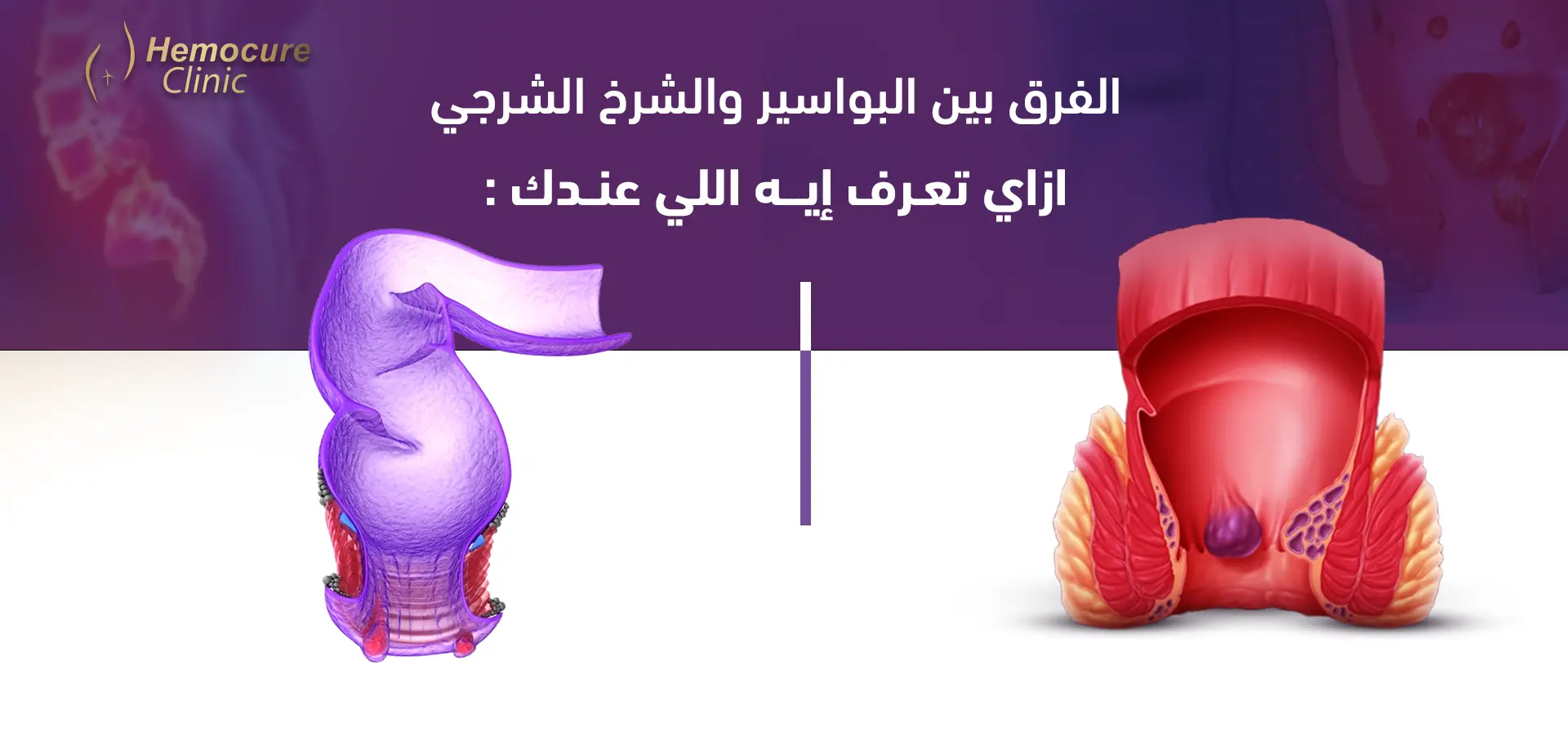
Pain when using the restroom? Bleeding? Burning?
These symptoms appear suddenly and cause fear and anxiety... Although Hemorrhoids and Anal Fissure are the two most common causes of anal pain and bleeding, many people cannot differentiate between them. This leads to an incorrect diagnosis... a delay in treatment... and sometimes a greater progression of the problem.
This article will be your comprehensive guide to knowing the real difference between hemorrhoids and anal fissure: their symptoms, causes, treatment methods, and when you must act immediately.
What are Hemorrhoids?
Hemorrhoids are the swelling and distension of veins located in the lower rectum or around the anus. They are classified into two types:
-
Internal Hemorrhoids: Located inside the rectum and may bleed without pain.
-
External Hemorrhoids: Appear around the anus and are often painful if they become clotted (thrombosed).
Most Common Hemorrhoid Symptoms
-
Bright red bleeding after a bowel movement.
-
A lump or protrusion at the anal opening (especially with external hemorrhoids).
-
Itching or skin irritation.
-
A feeling of incomplete evacuation.
-
Mild to moderate pain (increases if a blood clot forms within the hemorrhoid).
Causes of Hemorrhoids
-
Chronic constipation.
-
Sitting on the toilet for prolonged periods.
-
Pregnancy and childbirth.
-
Lifting heavy loads.
-
Weight gain.
-
Weakness of the vein walls.
What is an Anal Fissure?
An anal fissure is a small tear or cut in the skin lining the anus. It is considered one of the leading causes of severe pain during defecation.
Distinctive Anal Fissure Symptoms
-
Very severe pain during defecation that lasts minutes and may extend for hours.
-
The passage of a few drops of blood on toilet paper or in the toilet bowl.
-
A sensation of intense burning and stinging.
-
Spasm in the anal muscles.
-
Fear of using the restroom due to pain.
Causes of Fissure Occurrence
-
Severe constipation and the passage of hard stool.
-
Frequent diarrhea.
-
Lack of blood supply (ischemia) in some cases.
-
After natural childbirth.
-
Certain inflammatory diseases like Crohn's.
How to Differentiate Between Hemorrhoids and Fissure? (The Most Important Part)
This is the point where most people get confused. Stick with this brief table:
| Feature | Hemorrhoids | Anal Fissure |
| Nature of Pain | Mild or moderate (except with thrombosis) | Very severe pain resembling a "knife" |
| Bleeding | Bright red, usually painless | Slight spots of blood with violent pain |
| Swelling/Lump | Lump or skin tags at the anus | No lump (unless the fissure is chronic and a skin tag has formed) |
| Restroom Use | Usually no fear of using the restroom | Fear and dread of using the restroom due to pain |
| Visibility | Can be internal and not visible | Fissure is clear upon direct examination |
Simply put:
If the pain is so severe that it interrupts your life — it's likely a fissure, not hemorrhoids.
If there is a lump or skin tags — it's likely hemorrhoids.
However... The final diagnosis must be made by a specialist doctor.
Can Hemorrhoids and Fissures Occur Together?
Unfortunately... yes.
Many patients suffering from severe constipation may develop a fissure... and subsequently develop internal or external hemorrhoids due to straining.
This doubles the pain... and delays treatment. That is why correct diagnosis is the first key to proper treatment.
When Must You See a Doctor?
If you have any of these conditions, you must act immediately:
-
Pain that increases day by day
-
Recurrent bleeding
-
Difficulty sitting
-
Pain that lasts hours after a bowel movement
-
A large lump or swelling
-
No improvement after 3 days of home treatments
Delays in treatment can turn a simple fissure into a chronic one, or hemorrhoids into an advanced case requiring greater intervention.
Hemorrhoid Treatment Methods
Treatment is determined according to the degree of hemorrhoids:
1. Medical Treatment
For simple cases, it includes:
-
Anti-inflammatory creams
-
Anal suppositories
-
Vein-strengthening medications
-
Laxatives to improve bowel movement
2. Minimally Invasive Procedures
In specialized centers:
-
Rubber band ligation
-
Infrared photocoagulation
-
Doppler-guided ligation (THD)
-
Laser for internal or external hemorrhoids
3. Traditional Surgery (In Advanced Cases)
A definitive treatment, but it requires a specialized center and strong facilities.
Anal Fissure Treatment Methods (Updated according to Hemocure Protocol)
Anal fissure treatment primarily depends on the stage of the fissure — whether it is acute or chronic — and the complications it causes. At Hemocure, we rely on the latest international techniques to ensure the highest cure rates with minimal pain and the fastest recovery.
1. Medical Treatment (For Acute Cases Only)
This is beneficial at the onset of the problem and may prevent its progression:
-
Ointments that relax the anal sphincter muscle
-
Topical pain relievers
-
Laxatives to improve bowel movement
-
Warm water sitz baths
However... its effectiveness is limited if the fissure persists for more than 2–3 weeks.
2. Botox — Limited and Non-Sustainable Effectiveness
Despite its use in some centers, its effectiveness is very temporary, it does not treat the root cause, and the rate of fissure recurrence afterward is high. Therefore, within Hemocure, it is not considered a primary option nor is it offered as a long-term solution.
3. Laser Treatment — The Latest and Most Effective Solution within Hemocure
Laser is the most advanced and highly efficient technology for treating chronic anal fissures, characterized by:
-
Quick pain resolution
-
No muscle cutting is needed
-
Preserves stool control at 100%
-
Very high cure rate
-
The patient returns to their normal life on the same day
Laser is suitable for cases where medical treatment has failed or which have become chronic and cause severe pain.
4. Surgery (LIS) — For Complex Cases Only
Surgery remains an option for cases that do not respond to any of the previous solutions, but thanks to the laser... the rate of resorting to surgery within Hemocure has become very low.
Important Prevention Tips
-
Drink 2–3 liters of water daily
-
Maintain adequate dietary fiber
-
Avoid straining during defecation
-
Use a laxative if you have constipation
-
Go to the restroom as soon as you feel the need
-
Engage in light exercise daily
-
Reduce sitting for prolonged periods
If you have any of these symptoms— pain does not have to be a part of your day.
At Hemocure, we provide the latest precise diagnostic technologies (such as Proctostation and HR Anoscopy) and the latest laser treatments for hemorrhoids and anal fissures... with the highest safety standards, virtually pain-free, and without a long recovery period.
For booking or consultation: 15251
Conclusion
Although hemorrhoids and anal fissures are similar in some symptoms, especially bleeding and pain, the difference between them is fundamental... and correct diagnosis is the first step toward correct treatment.
Do not ignore the signal your body is sending you. Suffering is not fate... and treatment is available and more advanced than ever before.
Comments
Add New Comment