 English
 العربية


Author: Dr. Mohamed Magdy El-Najjar
(Colorectal Surgeon | Founder of Hemocure | Head of the Training Committee at ISOLP)
Publication Date: May 2026 | Last Medical Review: May 2026
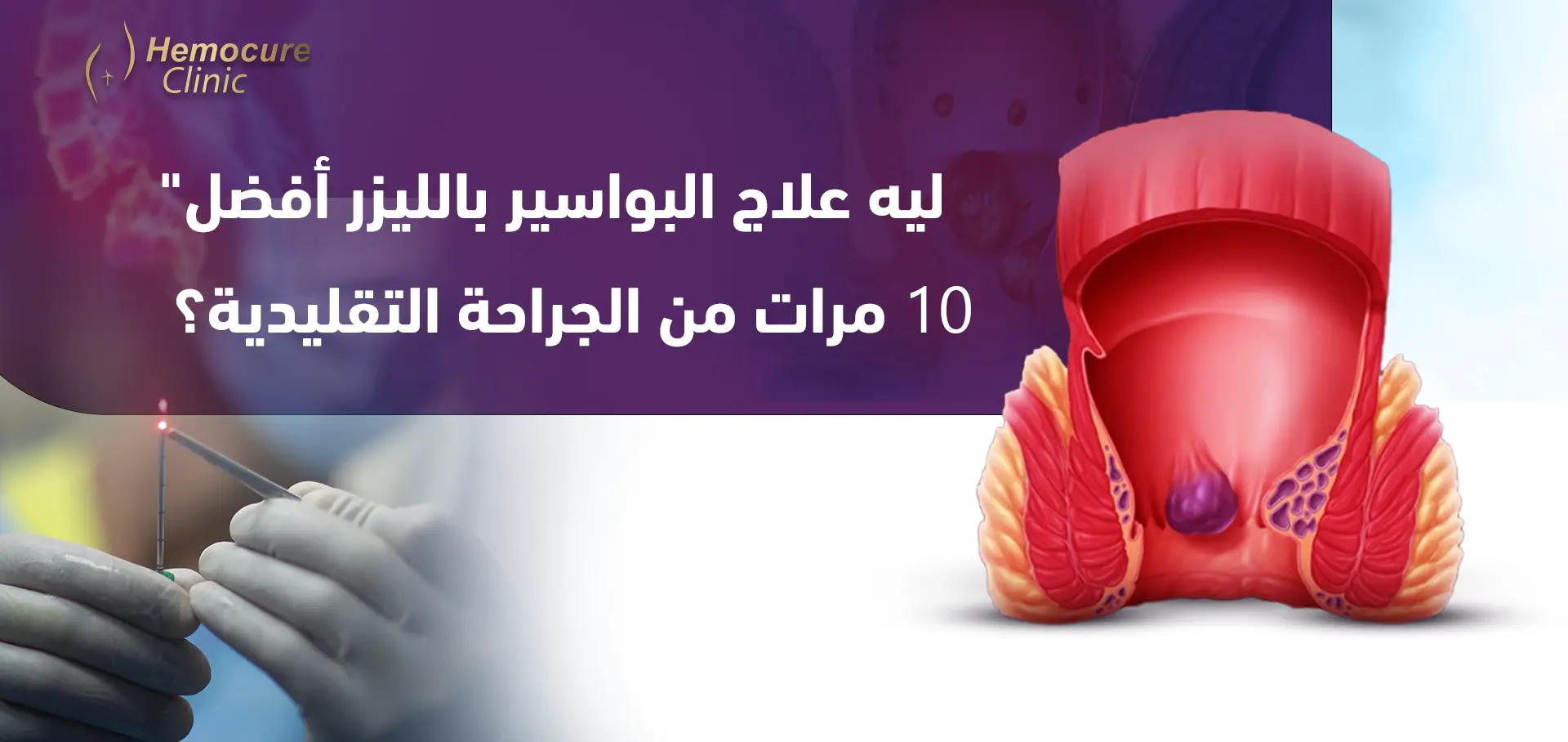
Laser, Surgery, or Non-Surgical Treatment?
One of the most frequent questions I get in the clinic is: "Doctor, what is the best treatment method for hemorrhoids?"
The honest answer that every patient needs to know is that there is no single best method for all cases — the right method is the one that specifically matches the severity of the disease and the patient's individual condition. However, there is a major mistake that many patients make before reaching the clinic — and it costs them dearly in both their health and money.
Critical Medical Warning: The Biggest Mistake is Looking for the Cheapest Option!
Choosing a treatment method based solely on the lowest price — whether by resorting to non-medical home remedies or visiting unqualified centers — leads patients to severe complications that could have been completely avoided if a proper treatment plan had been initiated early. A simple problem turns into a complex case, and at that point, treatment becomes more difficult, longer, and much more expensive.
Hemorrhoid Treatment Methods — A Comprehensive Comparison
To clarify the picture for you, non-surgical hemorrhoid treatments and modern interventions are divided into three main pathways, the choice of which depends entirely on an accurate examination:
-
Non-Surgical Hemorrhoid Treatment (Suitable for 1st and 2nd Degrees)
This pathway is highly suitable for early stages and is characterized by preserving natural tissues:
-
THD Doppler Technique: Relies on binding the artery supplying blood to the hemorrhoids and returning them to their natural position without any excision or wounds whatsoever.
-
Rubber Band Ligation: An excellent, proven technique for dealing with small internal hemorrhoids.
-
Recovery Period: Approximately one day. It is considered the best and safest option for patients with chronic illnesses that prevent them from undergoing general anesthesia.
-
Laser Hemorrhoid Treatment (Suitable for 2nd and 3rd Degrees)
Considered a breakthrough in the world of colorectal surgeries, offering comfortable solutions for the patient:
-
Muscle Protection: No cutting or altering of the anal sphincter muscles occurs at all.
-
Type of Anesthesia: Advanced local/regional anesthesia (Saddle Block) — the patient remains awake and fully conscious throughout the procedure without feeling any pain.
-
Mobility and Recovery: The patient can walk on their feet just a few hours after the procedure. Full recovery typically ranges from two to three days.
-
Bleeding and Pain: Up to 90% less compared to traditional surgery.
-
Traditional Surgery (For Advanced and Complex Cases)
Traditional surgery remains indispensable in certain highly advanced cases:
-
Indications for Use: Cases of complete and persistent rectal prolapse, or thrombosed 4th-degree hemorrhoids.
-
Effectiveness: It is definitely the most suitable choice at this stage to guarantee non-recurrence. The criteria here depend entirely on the stage of the disease, and a customized treatment plan is designed for each case.
The Difference Between Laser and Traditional Surgery
To ease your choice and help you understand the core differences between laser, traditional surgery, and non-surgical techniques, we have summarized the essential distinctions as follows:
-
Suitable Degree:
Non-surgical treatment suits the 1st and 2nd degrees. Laser treatment suits the 2nd and 3rd degrees. Traditional surgery suits advanced 4th degree and rectal prolapse cases.
-
Type of Anesthesia:
Non-surgical treatment is local or requires no anesthesia. Laser treatment relies on regional anesthesia (Saddle Block). Traditional surgery requires general or full spinal anesthesia.
-
Presence of Wounds or Cuts:
Non-surgical treatment involves no wounds at all. Laser treatment is performed via a microscopic incision (with no muscle cutting). Traditional surgery relies on surgical excision and tissue cutting.
-
Recovery Period:
Non-surgical treatment takes one day. Laser treatment takes 2 to 3 days. Traditional surgery takes 2 to 4 weeks.
Core Note:
The difference between the three methods is not about which is best or worst — the difference is in the timing and the specific condition. The exact same patient might need a laser treatment right now, but could require full traditional surgery if they neglect their condition and leave it to deteriorate for two years.
Why is Dr. Mohamed Magdy El-Najjar the Authority in Choosing the Treatment Method?
This question is vital — because choosing a treatment method is a precise medical decision, not a marketing choice.
-
Comprehensive Experience: Dr. El-Najjar is one of the few in Egypt and the Middle East who possesses real, practical experience in all three methods — he is not specialized in just one method that he forces upon the patient.
-
Multiple Medical Alternatives: More than 6 different international techniques for treating colorectal diseases are available at Hemocure clinics.
-
International Authority: Dr. Mohamed Magdy El-Najjar is the Head of the Training Committee at the International Society of Laser Proctology (ISOLP), where he trains surgeons from around the world on when to use lasers and when to resort to traditional surgery.
This blend of academic and practical expertise is what sets a global medical authority apart from a doctor who specializes in only a single technique.
How is the Right Treatment Determined at Hemocure?
Upon your visit to the clinic, we evaluate the condition based on 4 essential criteria:
-
Hemorrhoid Degree (From 1st to 4th).
-
Associated Complications: Is there an acute anal fissure or a fistula accompanying the hemorrhoids? (You can read more in the articles section of our website regarding laser anal fissure treatment).
-
General Health Status: The patient's age and the presence of chronic diseases such as diabetes, hypertension, or blood thinning.
-
Medical History: Has the patient undergone previous treatments or surgeries, and what were the outcomes?
Frequently Asked Questions (FAQs)
Q: Is laser hemorrhoid treatment permanent?
A: In most cases, yes, especially if the condition is classified and diagnosed at the right time and the correct technique is selected. The modern techniques utilized at Hemocure significantly reduce recurrence rates compared to old traditional surgery.
Q: Is traditional surgery dangerous?
A: Traditional surgery is a well-known, safe medical procedure in the hands of a specialized and experienced surgeon — but the decision to resort to it must be based on an accurate diagnosis and the tissue's actual need for excision, rather than just choosing the cheapest price or fearing lasers.
Q: Can I get treated for hemorrhoids in a single day?
A: In many cases — yes. Modern non-surgical and laser techniques at Hemocure allow the treatment to be performed and the patient to be discharged on the same day, returning to normal life within a few days, particularly for 1st, 2nd, and 3rd degrees.
Medical Reference
-
European Society of Coloproctology (ESCP)
Link: https://www.escp.eu.com
-
International Society of Laser Proctology (ISOLP)
-
American Society of Colon and Rectal Surgeons (ASCRS)
About the Author: Dr. Mohamed Magdy El-Najjar
Colorectal Surgeon | Founder and Director of Hemocure Group
Head of the Training Committee at ISOLP | International Reference for Laser Proctology since 2019
Profile Link: https://www.hemocureclinic.com/mhmd-m-alngar
Unsure which treatment method is suitable for your case? The first and only correct step is an accurate examination and diagnosis inside the clinic — not guessing from the internet.
Last Medical Review: May 2026 | Hemocure — #1 in the Middle East and Africa for Colorectal Diseases.
Medical Disclaimer: The content provided in this article is for educational and informational purposes only. It should not be considered a substitute for professional medical advice, diagnosis, or clinical examination inside the clinic.
Add New Comment