 English
 العربية


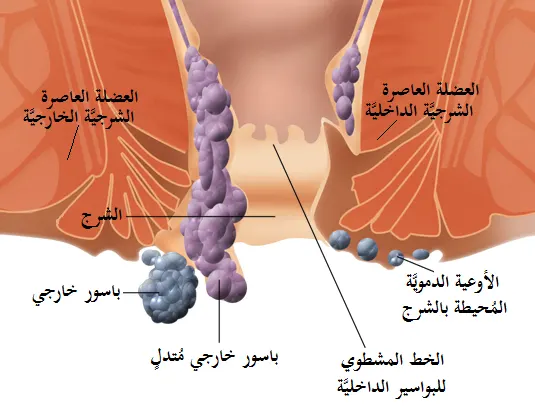
External hemorrhoids are one of the most common forms of hemorrhoids, arising from swollen veins located under the skin around the anal area. While many people may experience hemorrhoids without noticeable symptoms, external hemorrhoids usually present as a palpable lump and can cause severe pain if not managed properly.
What Are External Hemorrhoids?
Hemorrhoids are swellings or bulges that appear as a result of enlarged veins in the rectum or anal area. When these veins swell near the outer surface of the anus, they are known as external hemorrhoids. They can range from being very small to large, noticeable, and bothersome.
Appearance of External Hemorrhoids
The appearance of external hemorrhoids is typically characterized by lumps or bumps under the skin around the anus. They can vary in color, but they often have a bluish or purple tint due to blood pooling in the swollen veins. External hemorrhoids may feel soft and pliable to the touch, and they can be very painful, especially while sitting or during bowel movements.
In some cases, external hemorrhoids may develop blood clots inside them, a condition known as thrombosed hemorrhoids. In this scenario, the hemorrhoid becomes firm and hard, and the pain is significantly more intense compared to non-thrombosed external hemorrhoids.
Symptoms of External Hemorrhoids
In addition to their distinct appearance, several symptoms may accompany external hemorrhoids, including:
-
Anal Pain: Pain is considered the most common symptom, particularly when sitting or during bowel movements.
-
Itching and Irritation: External hemorrhoids can cause severe itching around the anal area due to skin irritation.
-
Bleeding: In some cases, minor bleeding may occur during bowel movements, often noticed as bright red blood on toilet paper.
-
Swelling: External hemorrhoids can be swollen and visibly noticeable around the anal region.
Can External Hemorrhoids Worsen?
If left untreated, external hemorrhoids can worsen and lead to more serious complications. If a blood clot forms inside the hemorrhoid, the pain can become acute and severe (thrombosed hemorrhoids). This situation may require a minor surgical procedure to remove the clot and relieve the pain.
When Should You See a Doctor?
Although many cases of external hemorrhoids can be managed with home remedies or over-the-counter medications, certain situations warrant a visit to the doctor. If the hemorrhoids are extremely painful, persist for long periods, or are accompanied by continuous bleeding, you should consult a specialist to evaluate the condition.
Treatment Methods
External hemorrhoids can be treated in several ways depending on their size and severity. Treatment options include:
-
Home Remedies: Topical ointments and creams can be used to relieve pain and swelling.
-
Warm Baths (Sitz Baths): Sitting in a warm bath can help reduce swelling and pain, aiding in the recovery process.
-
Surgical Intervention: In severe cases or when thrombosis occurs, a surgical procedure may be required to remove the hemorrhoid or the clot.
Prevention of External Hemorrhoids
To prevent external hemorrhoids and avoid their recurrence, it is recommended to adopt a healthy lifestyle based on:
-
Eating Dietary Fiber: To improve bowel movements and prevent constipation.
-
Drinking Water: To keep the body hydrated and facilitate easier bowel movements.
-
Avoiding Prolonged Sitting: Since excessive sitting increases pressure on the veins in the anal area.
Conclusion
External hemorrhoids are a common yet uncomfortable condition that requires proper attention to manage correctly. Understanding the appearance and symptoms of external hemorrhoids can help identify the condition early and allow for the necessary steps toward prevention or treatment.
Add New Comment