 English
 العربية


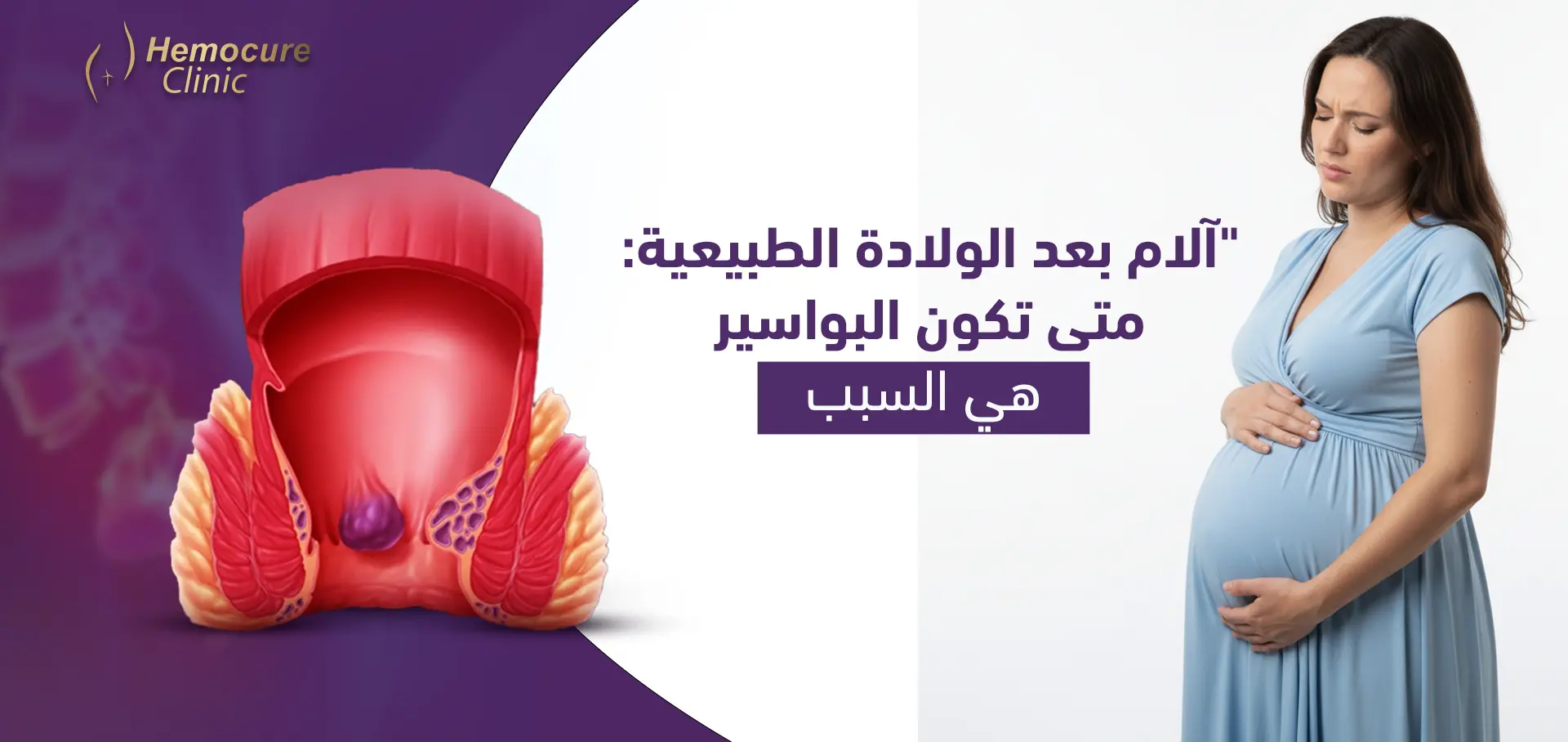
After a natural birth, a mother’s life undergoes a massive shift—balancing new responsibilities, sleep deprivation, and physical exhaustion. However, sometimes there is an unexpected guest: sharp pain in the anal and rectal area.
Do you feel pain during bowel movements? Minor bleeding? Burning or swelling? An annoying sensation of a "lump"?
Every mother wonders: Is this a normal part of postpartum recovery, or is it a medical issue that needs intervention? Most importantly... are hemorrhoids the culprit?
Hemorrhoids are among the most common conditions following natural childbirth, affecting a significant percentage of women. Distinguishing between "normal postpartum soreness" and "hemorrhoid symptoms" is the first step toward the right treatment.
In this guide, we will explore:
-
Why hemorrhoids occur after childbirth.
-
Symptoms you should never ignore.
-
The difference between hemorrhoids and anal fissures.
-
Modern, safe treatments for breastfeeding mothers at Hemocure.
Why Do Hemorrhoids Appear After Natural Birth?
Pregnancy and labor cause significant physical changes that affect the veins in the anal region. The primary causes include:
-
Fetal Pressure: In the final months, the weight of the fetus presses against pelvic veins, slowing blood flow and causing veins to swell.
-
Straining During Labor (Pushing): The intense, repetitive pushing during natural delivery increases pressure in the rectum, which can cause veins to bulge or prolapse.
-
Postpartum Constipation: Hormonal shifts, reduced activity, and dehydration often lead to constipation, which causes:
-
Pain during defecation.
-
Additional strain on the veins.
-
-
Hormonal Changes: Pregnancy hormones relax the walls of the veins, making them more susceptible to expansion and inflammation.
The Bottom Line: You didn't do anything wrong. Postpartum hemorrhoids are a common medical occurrence with clear biological causes.
How Do I Know if I Have Hemorrhoids?
Postpartum hemorrhoids have distinct warning signs:
-
Pain During Bowel Movements: A burning sensation or sharp sting, especially with constipation.
-
A Small Lump: A soft or painful mass near the anal opening (especially thrombosed external hemorrhoids).
-
Bright Red Blood: Noticed on toilet paper or as small drops in the toilet.
-
Swelling or Heaviness: A constant feeling of "fullness" or discomfort in the area.
-
Itching and Irritation: Caused by inflammation or mucus discharge.
-
Difficulty Sitting: Due to the pressure and pain of external hemorrhoids.
Hemorrhoids vs. Anal Fissure: What’s the Difference?
Many women confuse the two. However, the diagnosis is crucial because the treatments differ.
| Feature | Hemorrhoids | Anal Fissure |
| Type of Pain | Dull ache, throbbing, or burning | Sharp, stabbing pain (like a paper cut) |
| Timing | Constant or worse when sitting | Intense during bowel movements; lasts for hours after |
| Physical Signs | Swollen lumps or skin tags | No lumps, but a sensation of a "tear" |
| Bleeding | Bright red (can be painless) | Small amounts of bright red blood |
Normal Postpartum Pain vs. Hemorrhoid Pain
-
Normal Postpartum Pain: Usually appears in the first 3–10 days, relates to the healing of the perineum or stitches, and fades gradually.
-
Hemorrhoid Pain: Specifically linked to bowel movements, persists or worsens over time, and is often accompanied by a palpable lump.
Rule of Thumb: If the pain persists or worsens 10 days after delivery, a specialist examination is necessary.
Diagnostic Excellence at Hemocure
A precise diagnosis ensures you don't suffer unnecessarily. At Hemocure, we use advanced, pain-free diagnostic tools:
-
Proctostation: For a comprehensive rectal assessment.
-
High-Resolution Anoscopy: To visualize internal issues clearly.
-
Pelvic Ultrasound: To determine the exact degree of the condition.
Safe Postpartum Treatments: Your Best Options
We prioritize the safety of the mother and the breastfeeding infant. Treatment depends on the severity:
1. Conservative Management (For Mild Cases)
Includes breastfeeding-safe creams, gentle stool softeners, warm sitz baths, and a high-fiber diet.
2. Laser Treatment – The Gold Standard for New Mothers
Laser therapy is the ideal solution for postpartum hemorrhoids because:
-
Minimally Invasive: No surgical incisions or stitches.
-
Safe for Breastfeeding: No systemic drugs enter the bloodstream.
-
Quick Recovery: Mothers can return to caring for their newborns the same day.
-
Precision: We use the latest Leonardo 1940nm Laser, the most accurate technology globally.
8 Tips to Prevent and Manage Postpartum Hemorrhoids
-
Hydrate: Drink at least 3 liters of water daily.
-
Fiber-Rich Diet: Focus on leafy greens, fruits, and whole grains.
-
Don’t Wait: Go to the bathroom as soon as you feel the urge.
-
Avoid Straining: Relax during bowel movements; don't hold your breath.
-
Stay Mobile: Gentle walking helps stimulate bowel movements.
-
Use a Donut Pillow: To relieve pressure when sitting.
-
Gentle Hygiene: Use lukewarm water or fragrance-free wipes.
-
Pelvic Floor Exercises: (Kegels) can improve circulation in the area.
The Hemocure Promise – Call to Action
If you are a new mother suffering from anal pain, bleeding, or swelling—don’t wait for it to "go away on its own." The earlier you seek treatment, the faster and easier the recovery.
At Hemocure, we provide:
-
Accurate, painless diagnosis.
-
Laser solutions with zero downtime.
-
Complete privacy and comfort for mothers.
-
Full safety for breastfeeding.
Book your consultation today: 📞 15251
Conclusion
Postpartum pain is expected, but suffering from hemorrhoids shouldn't be your "new normal." With modern laser technology at Hemocure, you can heal quickly and get back to what matters most—your new baby.
Your health isn't a luxury; it's the foundation of your family.
Comments
Add New Comment